Garage Door Inspection Guide Before Calling for Repair
A garage door problem rarely arrives at a convenient time. It usually shows up when the car is half in the driveway, the weather is turning, or someone is late. The first instinct is often to call for garage door repair immediately, and sometimes that is the right move. A door that will not move, a door that drops unexpectedly, or an automatic opener that fails a safety reversal test deserves prompt professional attention.
Still, a careful garage door inspection before calling can save time, help you explain the problem accurately, and keep you from overlooking a simple safety issue. The goal is not to turn a homeowner into a technician. The goal is to separate what you can observe safely from what should be left alone.
Garage doors combine heavy moving panels, spring tension, overhead hardware, electrical controls, and safety devices. That mix deserves respect. A useful inspection is slow, visual, and conservative. If something feels risky, stop. A good repair visit starts with clear information, not with someone trying to prove they can fix more than they should.
Start with the right mindset: inspection, not repair
Before touching anything, make the distinction between garage door troubleshooting and garage door repair. Troubleshooting means observing symptoms, testing basic user controls, checking for obvious obstructions, and confirming whether safety features respond as they should. Repair means adjusting hardware, changing parts, working near springs, repositioning tracks, replacing cables, or altering opener settings beyond what the owner’s manual clearly allows.
That distinction matters most around garage door springs, torsion springs, garage door cables, and the parts that guide the door under load. These components are not decorative hardware. They are part of the lifting system, and the stored force around a garage door can create serious hazards. Even experienced tradespeople approach garage door installation and repair work in stages because the work often happens overhead, in tight spaces, with awkward body positions and hand tools. Those conditions increase the chance of mistakes.
A professional inspection may include measurements, adjustments, and component testing that a homeowner should not attempt. Your pre-call inspection should focus on what you can see, hear, and safely test from a stable position.
Confirm the problem before diagnosing it
Many garage door service calls begin with a broad complaint: “The door is broken.” That may be true, but it does not tell the technician much. A few minutes of observation can narrow the issue.
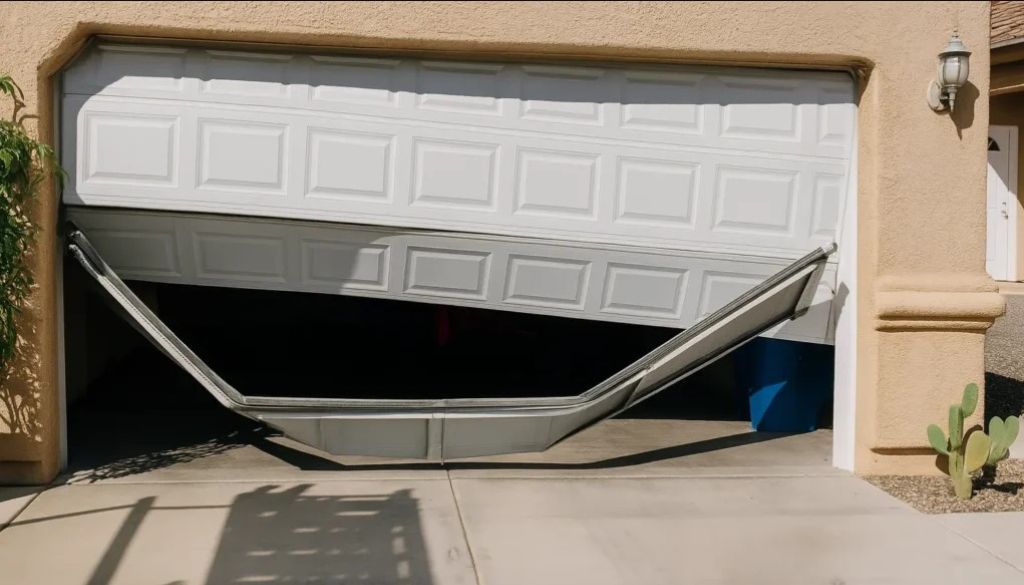
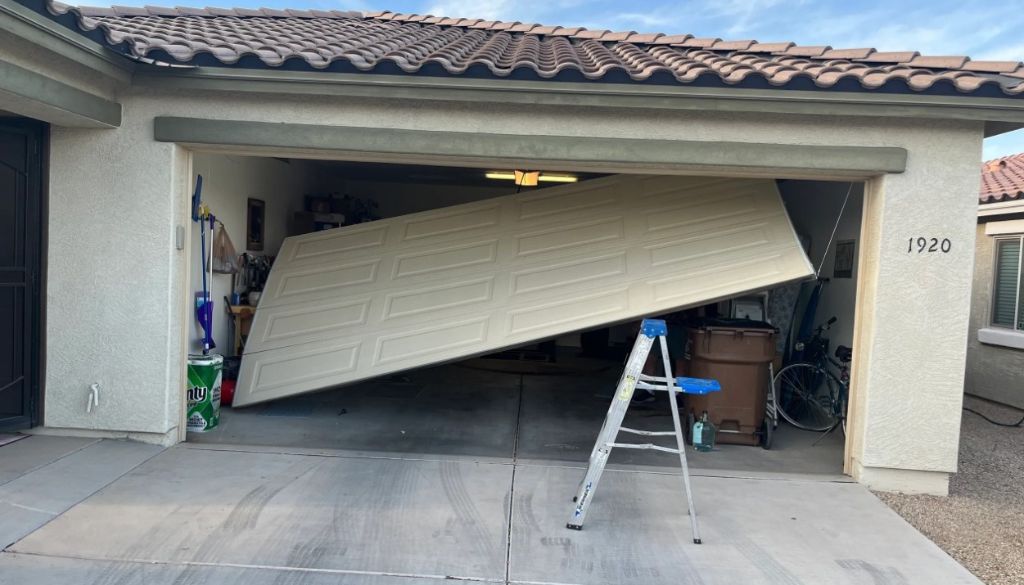
Watch the door from inside the garage if you can do so safely. Does the garage door opener hum without moving the door? Does the door begin to close and then reverse? Does it move a few inches and stop? Does it sit crooked in the opening? Does one side lag behind the other? Does the opener light flash? Does the wall control behave differently than the remote?
Those details matter because a garage door that reverses immediately may point toward garage door sensors or an obstruction in the path, while a door that strains or moves unevenly may suggest a balance, spring, roller, cable, or track issue. A door that works from the wall button but not from the remote may have a different cause than a door that does not respond to any control.
Do not force a door through a cycle to “see what happens.” One careful attempt is usually enough to record the symptom. Repeated starts and stops can worsen a mechanical problem, especially if the door is already out of alignment or dragging.
Check the area around the door
The simplest inspection begins with the floor and the door opening. Look for anything in the path of the door, including storage bins, bikes, garden tools, a folded mat, a trash can lid, or seasonal items that have crept too close to the tracks. A small obstruction can interfere with closing, especially if it blocks the path near the floor.
Look along both sides of the opening. Items leaning against the wall can press into the garage door tracks or sit close enough to catch the door as it moves. In many garages, the tracks share space with shelving, ladders, sports equipment, and extension cords. A door needs clean travel space. If something is touching the track or projecting into the door’s path, move it away before testing again.
Now look at the bottom of the door. A loose object under the weather seal can trigger a reversal or prevent the door from sealing evenly. If the door stopped on an object, do not assume the opener is faulty. Automatic openers are supposed to respond to obstructions, and that response is part of garage door safety.
Test the safety reversal carefully
Automatic residential garage door openers in the United States are subject to a federal safety standard. They must include entrapment protection, such as photoelectric “electric eye” garage door sensors or an equivalent safety system. That requirement exists because a closing garage door can trap a person, child, pet, or object if the system does not reverse properly.
A properly functioning garage door opener should reverse when the door is closing onto an obstruction. The safety reversal system should be tested monthly. If the door does not reverse, the opener should be adjusted according to the owner’s manual or inspected by a professional.
This is one area where you should be disciplined. Do not use your hand, foot, or body to test reversal. Keep children away during any test, and keep remote controls out of their reach. Garage door safety is not just about the hardware. It is also about habits.
A basic pre-call safety check can include the following:
That short test can tell you a great deal. If the door closes only when you hold the wall button down, or if it reverses as soon as it starts down, the sensors may be blocked, misaligned, damaged, or otherwise not communicating properly. Do not bypass sensors to make the door work. A garage door opener without functioning entrapment protection is not a minor inconvenience. It is a safety hazard.
Look at the garage door sensors without disturbing them
Photoelectric garage door sensors usually sit low on either side of the door opening, facing one another. Their job is to detect an obstruction across the doorway while the door is closing. If the beam is blocked, the opener should not close normally.
During inspection, keep it simple. Check whether the sensors appear to face each other. Look for dirt, spider webs, loose brackets, or items in the beam path. If your garage floor is crowded, it is easy for a broom handle, cardboard box, or child’s toy to interrupt the beam. Clear the area gently and try the door again only if nothing appears damaged.
Be cautious about twisting sensor brackets or moving wires. A small bump can change alignment. If the sensors are loose, hanging, physically damaged, or repeatedly failing after the area is cleared, that is useful information for the repair company. Tell them what you observed rather than trying to rebuild the setup.
Because the federal safety standard requires a sensor or equivalent entrapment protection on residential automatic openers, missing or defeated sensors deserve immediate attention. Some older-looking systems may have different designs, but the practical rule is the same: the door must have a working safety system that prevents entrapment.
Listen before you lubricate
Noise is one of the most common reasons people ask for garage door maintenance. A noisy door may need lubrication, but noise by itself does not identify the part that needs attention. A squeak, grind, rattle, pop, scrape, or shudder can come from different places.
Stand safely inside the garage and run the door only if it appears safe to do so. Listen for where the sound starts. Does the noise professional garage door repair Gold Coast come from the opener rail area, the rollers, the hinges, the tracks, or the spring assembly above the door? Does it happen only at the beginning of travel, only near the floor, or through the entire movement?
Garage door lubrication can reduce friction and noise when applied correctly to appropriate moving parts. However, lubrication is not a cure for a door that is off track, out of balance, reversing improperly, or operating with worn or damaged hardware. Spraying lubricant everywhere can also make inspection harder by coating parts with residue and attracting grime.
If you already lubricate the door as part of normal garage door maintenance, follow the product guidance and the door or opener manufacturer’s instructions. If the noise is new, sharp, or accompanied by jerky movement, inspect first and call for service before masking the symptom.
Inspect the tracks, but do not force them
Garage door tracks guide the rollers as the door opens and closes. They should provide a clear path. During a visual inspection, look for obvious bends, gaps, loose-looking fasteners, scraped areas, or spots where a roller appears to bind. Also look for objects lodged in the track. Small debris can create large symptoms if it catches a roller at the wrong time.
Avoid hammering, prying, bending, or loosening track hardware. Track position affects how the door moves. A seemingly small adjustment can change the way the door sits in the opening or how the rollers carry the load. If a door has come out of the track, sits crooked, or scrapes hard against one side, stop operating it. That is no longer a casual troubleshooting issue.
A useful observation for the repair technician is whether the problem happens at the same spot every time. For example, if the door sticks halfway up in the same place, mention that. If it binds only when closing, mention that too. These details help distinguish track, roller, opener, balance, and door-section problems.
Examine the rollers and hinges from a safe distance
Garage door rollers should travel smoothly inside the tracks. Worn, damaged, or stuck garage door rollers can make a door noisy or uneven. Hinges connect door sections and help them articulate through the curved part of the track. A loose or damaged hinge can change the door’s movement and increase stress on nearby parts.
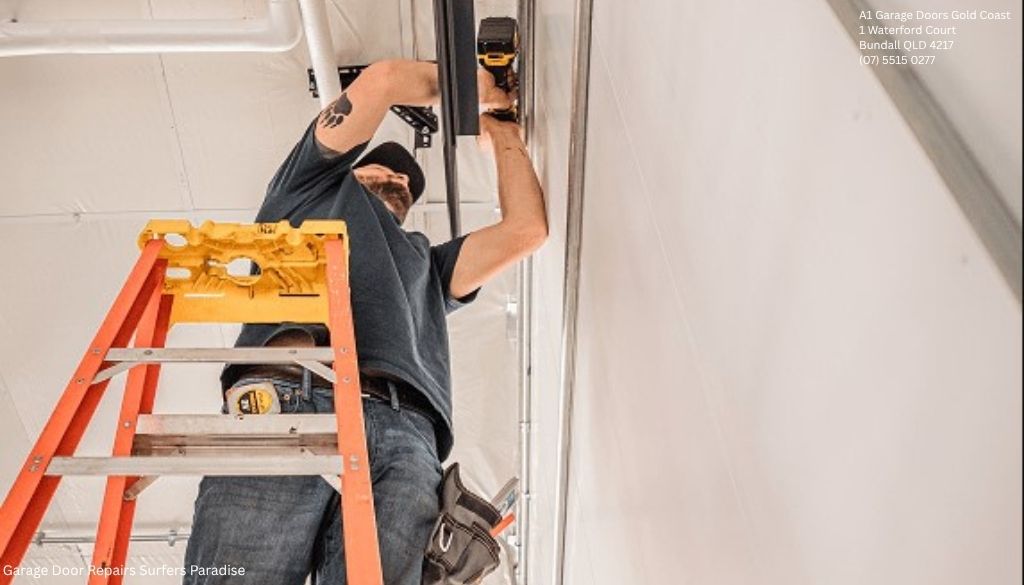
Your inspection should be visual. Look for rollers that appear cracked, tilted, missing, or outside the track. Look for hinges that appear bent, separated, or missing fasteners. Do not put fingers near hinges, roller stems, or track openings while the door is moving. Pinch points are easy to underestimate because the movement looks slow until a section shifts.
If you see metal shavings, fresh scrape marks, or a roller that does not spin as the door moves, note it. If the door jerks at the curved track, note that too. These are practical observations that help a technician arrive prepared.
Treat springs and cables as professional territory
The spring system carries much of the door’s lifting work. Many residential doors use torsion springs mounted above the door opening, though spring configurations vary. Garage door springs and garage door cables are closely tied to door balance and safe operation.
There is a simple homeowner rule here: look, but do not touch. Do not loosen brackets. Do not unwind springs. Do not remove cable drums. Do not attempt to reattach a cable that has come off. Do not lift a heavy door repeatedly to “help it along.” Spring and cable work belongs to trained professionals with the right tools and procedures.
Visual clues still matter. A broken torsion spring may be visible as a separation in the coil. A cable may appear slack, frayed, off its drum, or uneven from one side to the other. The door may hang crooked, feel unusually heavy, or refuse to stay in position. If any of those symptoms appear, stop using the door and call for garage door repair.
One of the most common risky moments is when a homeowner pulls the emergency release because the opener is not working, then discovers the door is too heavy to lift or will not stay open. If the door’s balance is compromised, the opener may have been the only thing keeping it from moving unexpectedly. Use the emergency release only with care, follow the owner’s manual, and never stand under a door that may move unpredictably.
Understand garage door balance without making it a stunt
Garage door balance describes whether the spring system properly counterbalances the weight of the door. A balanced door should not feel like dead weight, and the opener should not have to drag it through the full travel. Poor garage door balance can strain the opener and create unsafe movement.
Many owner’s manuals describe a balance check, often involving disconnecting the opener and moving the door manually. If you are not comfortable doing that, do not do it. If the door is already showing signs of spring or cable trouble, do not do it. A balance check is not worth a crushed hand, a falling door, or damage to the door sections.
Instead, observe indirect signs. Does the opener sound strained? Does the door close too quickly? Does it rise only partway and stop? Does it sag on one side? Does it slam against the floor? These are enough to justify professional inspection.
When you call, describe balance-related symptoms plainly. “The door feels heavy” is useful. “The opener moves the door three inches and then stops” is useful. “One side is lower than the other” is useful. You do not need to name the failed component with certainty.
Separate opener problems from door problems
The garage door opener is often blamed for every malfunction because it is the part with the motor, lights, buttons, and remote controls. Sometimes it is the culprit. Other times it is responding to a door problem or a safety issue.
An opener that runs but does not move the door may have a mechanical disconnect, drive issue, or door-related resistance. An opener that reverses during closing may be reacting to its safety system. An opener that does nothing from any control may have an electrical or control issue. An opener that works with the wall control but not the remote may point toward the remote side of the system.
The important point is that the opener should not be forced to overcome a bad door. If a door is jammed, off track, out of balance, or affected by spring failure, repeated opener use can add damage. A residential opener is designed to operate a properly functioning door, not compensate for unsafe hardware.
If you have the owner’s manual, check the basic user guidance before calling. Manuals often explain indicator lights, remote control behavior, emergency release operation, and safety reversal adjustment. If the manual directs adjustment and you are comfortable with that exact step, proceed carefully. If the door fails reversal testing, keeps reversing, or behaves unpredictably after basic checks, call a professional.
When inspection points to repair rather than maintenance
Some issues fall outside routine garage door maintenance. Lubrication, clearing obstructions, keeping sensor areas clean, and observing monthly safety checks are owner-level responsibilities. Replacing or adjusting loaded parts is not.
Call for professional garage door repair if you notice any of these conditions:
Those conditions involve either safety systems or loaded mechanical parts. Waiting can make the repair more expensive, but the bigger issue is risk. A garage door is usually the largest moving object in a home. Treat abnormal movement as a warning, not a quirk.
What to document before making the call
A good service call starts with a clear description. You do not need technical language, but you should be precise. Write down when the problem started, what the door was doing, whether anything changed recently, and what you already checked.
For example, “The door closes about halfway, reverses, and the sensor area is clear” gives the technician a strong starting point. “The door is crooked and the cable on the right side looks loose” signals a more urgent mechanical issue. “The opener runs but the door does not move” narrows the conversation. If the problem happens only in the morning, after rain, or after storage items were moved in the garage, say so. Even ordinary details can help.
Take photos if you can do so safely. A picture of the opener model label, the door from inside the garage, the sensors, or an obviously loose cable can help the office or technician understand what they may be walking into. Do not climb, stretch over vehicles, or stand on unstable objects for a better angle. A safe, imperfect photo is better than an unsafe one.
Maintenance habits that prevent many service calls
Garage door maintenance works best when it is routine and modest. The most valuable habit is the monthly safety reversal test. The safety system is not something to test once and forget. It protects against entrapment, and federal safety requirements exist because the consequences of failure can be severe.
Beyond that, keep the door area clear. Many sensor problems are not caused by failed electronics but by normal garage clutter. Sweep near the threshold, keep storage away from the tracks, and make sure children understand that the garage door is not a toy. Remote controls should be kept out of their reach. That guidance is simple, but it matters.
Listen to the door every so often. Most homeowners know the normal sound of their garage door without thinking about it. When the rhythm changes, pay attention. A new scrape, snap, shudder, or hesitation is worth inspecting before it becomes a full failure.
Lubricate only as appropriate and according to guidance for your door and opener. More lubricant is not better if it ends up in the wrong places or hides grime. If the door is already binding, lubrication may quiet it temporarily while the underlying problem worsens.
When replacement enters the conversation
Garage door replacement is different from a repair visit. Replacement may be discussed when damage, age, repeated failure, or compatibility problems make repair less practical. The verified safety requirements for automatic residential openers also matter here. A new or updated automatic system must provide required entrapment protection, such as photoelectric sensors or an equivalent system.
Garage door installation involves overhead work, alignment, hardware, opener setup, and safety testing. It is not just a matter of hanging panels. The work can involve ceiling-height tasks, cramped areas, awkward positions, and tool use, all of which increase physical risk. That is why careful, staged installation practices matter and why many homeowners choose professional installation rather than attempting the work themselves.
If a repair company recommends replacement, ask them to explain the reason in plain terms. Is the door structurally damaged? Are parts unavailable? Is the opener failing safety tests? Is the door no longer operating safely with its current hardware? A professional answer should connect the recommendation to function, safety, and long-term reliability, not pressure.
A calm inspection makes the repair visit better
The best pre-call inspection is not dramatic. It is a patient walkaround, a careful safety check, and a few notes about symptoms. You look at the doorway, sensors, tracks, rollers, springs, cables, opener behavior, and door movement without taking unnecessary risks. You test the safety reversal system monthly and stop using the opener if it does not reverse properly. You keep children away from controls and treat the door as a powerful moving system, not a household convenience that can be ignored until it fails.
Some problems will turn out to be simple. A box blocks a sensor. A broom handle leans into the track. A remote does not behave the same as the wall control. Other problems will require professional garage door repair, especially anything involving torsion springs, garage door cables, door balance, damaged tracks, failed safety reversal, or unpredictable movement.
That judgment is the real value of inspection. It helps you know when to clear an obstruction, when to check the owner’s manual, when to stop operating the door, and when to call for help. A garage door that opens and closes smoothly fades into the background of daily life. A door that behaves badly deserves your full attention, and the safest repairs begin with careful observation.