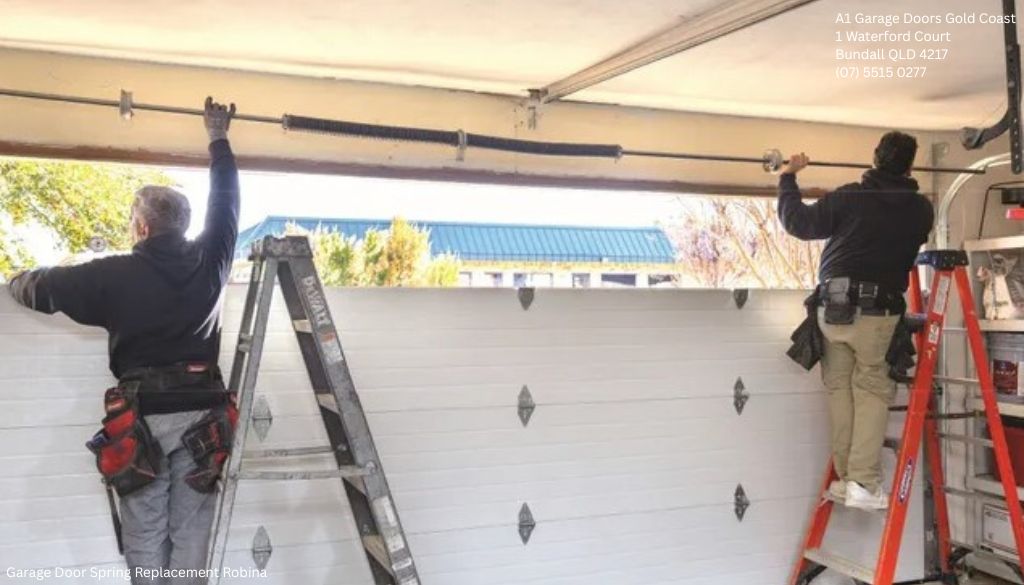
Garage Door Opener Troubleshooting for Safety Reversal Issues
A garage door opener is easy to take for granted until it refuses to close, reverses for no obvious reason, or worse, fails to reverse when it should. Of all the problems that come up in garage door troubleshooting, safety reversal issues deserve the most careful attention. They are not just convenience problems. They involve the system designed to reduce the risk of entrapment and injury.
Residential automatic garage door openers in the United States are covered by a mandatory federal safety standard. That standard requires entrapment protection, such as a photoelectric “electric eye” sensor or an equivalent safety system. The reason is straightforward: a closing garage door is heavy, powered, and often operated from a distance. If the door does not detect an obstruction and reverse properly, the hazard is immediate.
In practical garage door repair work, safety reversal complaints usually fall into two categories. The first is nuisance reversal, where the door starts down and comes back up even though nothing appears to be in the way. The second is failure to reverse, where the door continues closing when it should stop and reverse. The first can be frustrating. The second is dangerous and should be treated as a safety failure, not a minor adjustment.
What the safety reversal system is supposed to do
A properly functioning garage door opener should reverse when the closing door encounters an obstruction. Modern residential systems also use garage door sensors or an equivalent entrapment protection feature to detect a problem before the door reaches a person, pet, or object in the opening. The photoelectric style is familiar to most homeowners: one unit sends a beam across the bottom of the door opening, and the other receives it. If the beam is blocked while the door is closing, the opener should stop and reverse.
This is why garage door sensors are mounted low, near the floor, rather than at eye level. The point is not to make the system look tidy. The point is to detect something in the path of the closing door where an entrapment risk would exist. During a garage door inspection, the sensor area should never be treated as cosmetic trim or an optional accessory. It is part of the safety system.
The second part of the safety reversal function is the opener’s response when the door contacts an obstruction. A door that keeps pushing downward after meeting resistance is not behaving safely. Federal safety rules exist because non-reversing garage door openers have been recognized as a hazard, and fatal entrapment incidents have occurred. That history is not a scare tactic. It is the reason monthly testing is recommended and why a failed reversal test should not be ignored.
Why a door reverses when nothing seems to be there
When a homeowner calls about a garage door opener that will not close, the description often sounds simple: “It goes halfway down and opens again.” The temptation is to blame the opener immediately. Sometimes the opener is involved, but many safety reversal complaints begin with something less dramatic.
The photoelectric sensors may be blocked, misaligned, dirty, loose, or affected by something in the garage environment. A storage bin may sit just close enough to interrupt the beam when the door moves. A broom handle may lean into the opening. Cobwebs, dust, or debris may interfere with the sensor lens. The receiving eye may have been bumped during sweeping or while moving bikes, trash cans, tools, or lawn equipment.
A nuisance reversal can also come from door movement problems. The garage door opener is only one part of the system. The door itself moves on garage door tracks, rides on garage door rollers, and is supported by garage door springs, including torsion springs on many residential systems. Garage door cables, brackets, hinges, and track alignment all affect whether the door travels smoothly. If the door binds, drags, or shifts as it closes, the opener may interpret that resistance as an obstruction.
This is where judgment matters. A homeowner may see only the symptom, while an experienced technician watches the whole movement of the door. Does the door hesitate at the same point every time? Does it reverse only when cold weather stiffens the system? Does one side lag behind the other? Does the opener strain before reversing? These observations help separate a sensor issue from a door balance or hardware issue.
Garage door lubrication can also play a role in how smoothly the system moves, though lubrication is not a cure for a damaged part or a badly adjusted door. Proper garage door maintenance reduces friction at appropriate moving points, but it does not compensate for a bent track, worn rollers, frayed cables, or spring problems. If lubrication appears to “fix” a reversal issue only briefly, the underlying problem may still be present.
When failure to reverse becomes an urgent safety concern
A door that reverses too often is inconvenient. A door that does not reverse when tested is a safety concern that calls for immediate action. Consumer safety guidance has long warned that non-reversing openers are hazardous. Safety reversal systems should be tested monthly, and if the door fails to reverse, the opener should be adjusted according to the owner’s manual or inspected by a professional.
That distinction is important. Some adjustments belong in the owner’s manual because they are part of ordinary setup or verification. Other problems are not safe for casual repair. Garage door springs, torsion springs, cables, and the door’s weight-bearing hardware can create serious physical hazards. Work around ceiling-mounted openers also involves height, awkward posture, hand tools, cramped spaces, and other practical risks. A careful garage door repair process respects those hazards rather than rushing through them.
If the door fails a reversal test, do not keep using it while assuming everyone in the house will “be careful.” That is not a reliable safety plan. Children should be taught garage door safety, and remote controls should be kept out of their reach, but supervision and safe habits do not replace a functioning reversal system. The opener should do its job every time.
A practical monthly safety check
Monthly testing is not complicated, but it should be done deliberately. The goal is not to force the opener through repeated stress. The goal is to confirm that the safety features respond properly and that the door behaves predictably.
This short routine is one of the most valuable pieces of garage door maintenance a homeowner can perform. It takes only a few minutes, but it catches problems that may otherwise remain hidden until the wrong moment. A garage door opener can sound normal, light up normally, and respond to the remote normally while still failing a safety reversal test.
The monthly check should also include a little common sense observation. Look at the sensor brackets. Look at the wires if they are visible. Look at the garage door tracks and the path of the rollers. Listen for scraping, grinding, popping, or uneven movement. These observations do not require taking anything apart. They simply help you notice when the system has changed.
The sensor side of troubleshooting
Photoelectric sensors are simple in purpose, but their installation and alignment matter. When they are out of position, the opener may refuse to close or may reverse as soon as the close cycle begins. This is often the best-case safety failure because the system is telling you something is wrong rather than allowing the door to close unsafely.
Start with the obvious. The sensor path should be clear from one side of the opening to the other. Items stored along the wall can shift just enough to break the beam. A cardboard box that did not matter yesterday may sag overnight and sit in the wrong place today. Seasonal clutter causes many service calls, especially when garages are used for everything except parking cars.
Next, look at whether the sensors face each other squarely. A sensor can be bumped by a foot, a trash can, a child’s toy, or the end of a shovel. If one bracket twists, the beam may not line up. Even if the units still look close to aligned, small changes can matter. A professional garage door inspection often includes checking sensor placement because a marginal alignment can create intermittent nuisance reversals.
The sensor lenses should also be clean. Garages collect dust, pollen, sawdust, and spider webs. Wiping the lenses gently can remove an obstruction that is not obvious at first glance. Harsh handling is unnecessary. The goal is to clear the view, not bend the brackets or disturb the wiring.
If the sensors appear damaged, missing, or bypassed, the situation is different. A required safety feature should not be defeated to make the door close. Bypassing a garage door safety device may seem like a quick fix, but it removes protection the system is supposed to provide. That kind of shortcut can create exactly the hazard the standard was designed to prevent.
The door itself can cause reversal symptoms
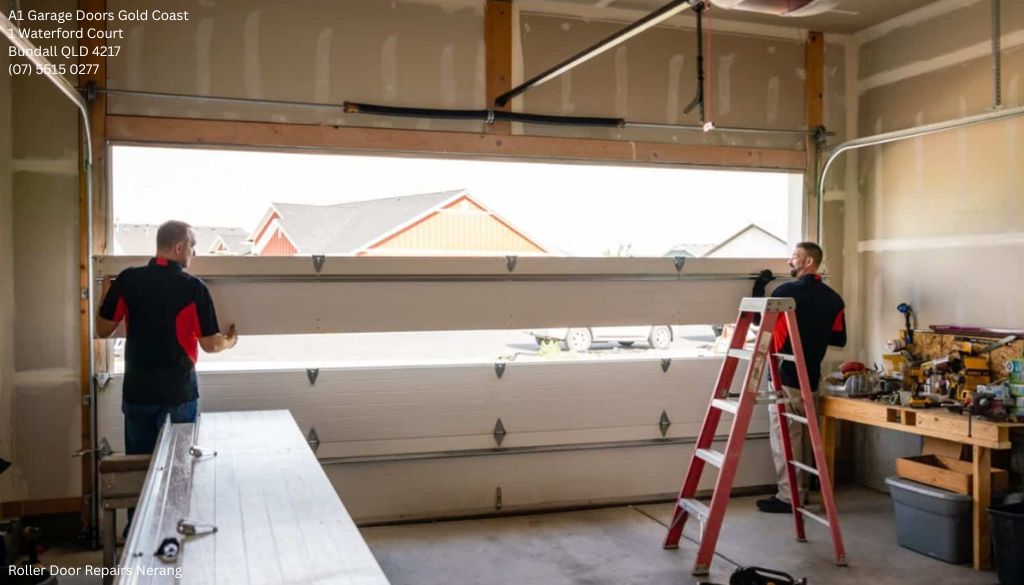
An opener does not operate in isolation. It pulls or pushes a door that must already be capable of moving correctly. If the garage door balance is poor, if rollers bind in the tracks, or if cables do not track evenly, the opener may struggle. That struggle can show up as a reversal issue.
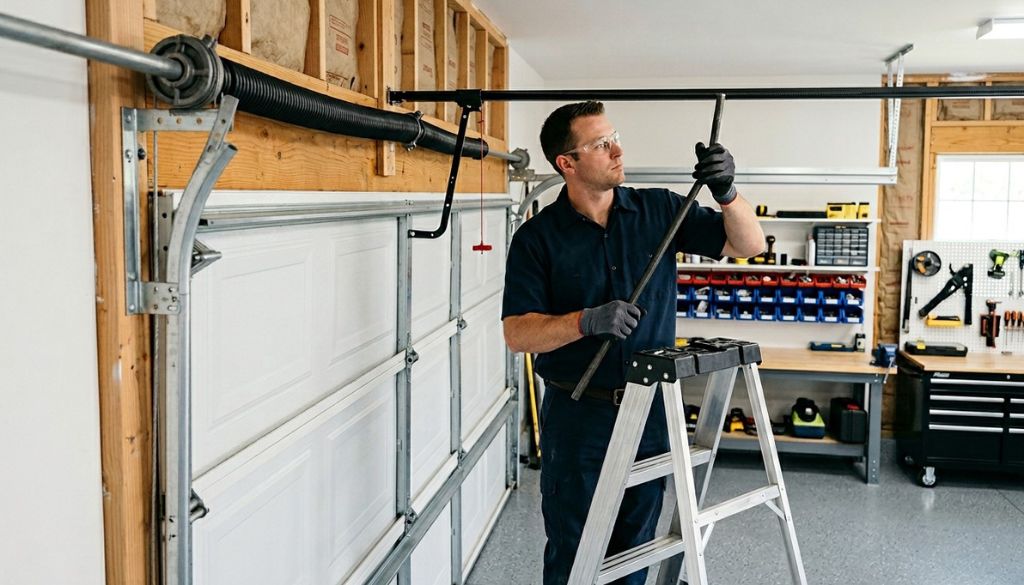
A balanced garage door should not feel wildly heavy, slam downward, or drift unpredictably when disconnected and moved according to the owner’s safe-use instructions. However, checking balance can bring a homeowner close to spring and cable hazards, so it should be approached with caution. Garage door springs store force. Torsion springs in particular are not parts to experiment with. If the door seems unusually heavy, crooked, noisy, or unstable, professional garage door repair is the safer route.
Garage door rollers are another common source of rough travel. Worn or damaged rollers can make the door chatter or bind, especially at certain points in the tracks. Garage door tracks can also become bent or shifted, which may cause the door to pinch or drag as it moves. The opener may sense resistance and reverse, not because the opener is defective, but because the door is not traveling freely.
Garage door cables deserve careful respect. A cable that is frayed, loose, or uneven can affect door movement and may signal a serious mechanical problem. This is not a homeowner adjustment item. The cable system works with the springs and the weight of the door. If cable trouble appears during troubleshooting, stop treating the problem as an opener issue and call for service.
Opener adjustments: when the manual matters
Safety reversal systems should be adjusted according to the owner’s manual when adjustment is required. That phrase matters because openers are not all identical. Controls, setup procedures, and testing instructions vary by model. Guessing at force settings, travel limits, or sensor behavior can make the system less safe rather than more reliable.
A common mistake is to compensate for a hard-moving door by increasing the opener’s closing force. That may make the symptom disappear for a while, but it can mask a mechanical defect. The better question is why the opener needed extra force in the first place. If the tracks, rollers, springs, cables, or balance are wrong, the opener adjustment is not the root repair.
Another mistake is changing several settings at once. Good troubleshooting is staged. Make one observation, check one likely cause, and test again. If a technician adjusts an opener after confirming the door travels smoothly and the sensors function, that adjustment has context. If someone twists controls randomly because the door is annoying, the final setting may be unsafe and difficult to diagnose later.
A garage door opener is designed to add convenience and control, not to overpower a defective door. When the door’s mechanical condition is sound, the opener’s safety features have a much better chance of working correctly. When the door is neglected, the opener becomes the part everyone blames because it is the part with the button.
Older openers and replacement decisions
If an automatic residential opener does not have the required entrapment protection, such as photoelectric sensors or an equivalent safety system, it should be treated seriously. Garage door replacement is not always the issue. Sometimes the door is usable, but the opener is outdated or unsafe. In other cases, the whole system may be near the end of its practical life, including the opener, tracks, rollers, cables, and spring system.
Garage door installation decisions should not focus only on horsepower, remotes, or quiet operation. Safety features and proper setup matter just as much. A new opener installed on a poorly balanced or damaged door will not solve every problem. Likewise, a well-made door connected to a badly installed opener can still create nuisance reversals or unsafe behavior.
There is also a trade-off between repair and replacement. If the opener is relatively current, has intact safety features, and the issue traces to alignment or ordinary adjustment, repair may be sensible. If the opener lacks modern entrapment protection or repeatedly fails reversal testing, replacement may be the more responsible choice. If the door itself has multiple mechanical problems, replacing the opener alone may be the wrong investment.
A professional evaluation should look at the system as a whole. That includes the opener, door balance, springs, cables, rollers, tracks, sensor installation, and the way the door behaves through a full cycle. A narrow repair that ignores the rest of the system may leave the homeowner with the same safety concern in a different form.
When to stop troubleshooting and call for service
There is value in basic homeowner troubleshooting. Clearing the sensor path, cleaning lenses, checking for obvious obstruction, and reviewing the owner’s manual are reasonable steps. But garage doors combine electrical controls, moving panels, springs under residential garage door services Gold Coast tension, suspended equipment, and heavy materials. Some symptoms should end the do-it-yourself portion of the process.
Call a qualified garage door repair professional if any of the following are true:
These are not signs that the homeowner has failed. They are signs that the problem may involve parts of the system where experience and proper tools matter. Installation and repair work can involve ceiling height, cramped spaces, awkward positions, and tool hazards. A careful technician manages those risks as part of the job.
Garage door safety in a household routine
The safest garage door system is not only a well-adjusted machine. It is also part of a household routine that respects the door’s movement. Children should understand that the garage door is not a toy, not a race gate, and not something to duck under while it is closing. Remote controls should be kept out of their reach. Wall controls should be used with a clear view of the door whenever possible.
This advice may sound basic, but it matters because automatic doors can create a false sense of certainty. People press a button and walk away. They assume the door will respond perfectly because it did yesterday. Monthly testing interrupts that assumption in a useful way. It asks the owner to watch the door, listen to it, and confirm that the safety system still performs.
Households with busy garages need extra awareness. Bikes, strollers, sports gear, tools, and storage bins often collect near the tracks and sensor line. A door that worked safely when the garage was empty may behave differently when the opening is crowded. The safety sensors cannot do their job if they are blocked, damaged, or knocked out of position.
What a technician looks for during a safety reversal complaint
A strong service visit for safety reversal issues is not just a quick button press. The technician should observe the door through a full cycle, inspect the sensor setup, evaluate the opener response, and look for mechanical causes of resistance. The order may vary depending on the symptom, but the principle stays the same: prove the door is safe to operate, not merely able to move.
If the complaint is that the door reverses without obstruction, the technician will usually watch for binding, track issues, roller problems, loose hardware, and sensor interruptions. A door that reverses at the same spot each time may point toward a physical travel problem. A door that reverses randomly may point toward intermittent sensor alignment or environmental interference. A door that reverses immediately may suggest the safety beam is not being received or the system detects a fault.
If the complaint is that the door does not reverse, the response should be more cautious. The technician should verify the safety system according to appropriate procedures and the opener’s instructions. If adjustment is needed, it should not be made blindly. If the opener cannot be made to reverse properly, it should not remain in routine use.
The best technicians also explain what they found in plain language. “Your opener is bad” is less useful than, “The photoelectric sensors are not staying aligned because the bracket is loose,” or, “The door is binding in the track, and the opener is reversing because it is meeting resistance.” Specific findings help the homeowner make better repair or replacement decisions.
Preventing reversal problems before they become urgent
Regular garage door maintenance is not glamorous, but it pays off. A door that is clean, balanced, lubricated where appropriate, and inspected periodically is less likely to create confusing opener symptoms. Maintenance does not eliminate the need for testing, and it does not remove the safety role of the sensors. It simply keeps the mechanical side from working against the opener.
Garage door lubrication should be done with attention to the parts that are meant to move. Over-lubricating everything in sight can attract grime and does not correct damaged hardware. During maintenance, the more important habit is observation. Are the rollers moving smoothly? Are the tracks clear? Does the door sound different than it did last month? Are the sensors still firmly mounted? Has anything been stored in the beam path?
Seasonal changes can also expose marginal conditions. A door that barely clears a rough spot in mild weather may reverse when conditions change. A sensor bracket that is slightly loose may behave well for weeks, then drift after a bump. Many reversal issues are not sudden failures. They are small changes that accumulate until the opener can no longer complete a safe close cycle.
A periodic professional garage door inspection is especially useful when the door is older, heavily used, or part of a busy household. The inspection can identify wear in rollers, cables, tracks, springs, and opener components before the symptom becomes a safety failure. It can also confirm that the entrapment protection system is installed and working as intended.
Repair, adjustment, or replacement: making the right call
The right solution depends on what the troubleshooting shows. A blocked sensor may need only a cleared path. A dirty lens may need cleaning. A loose sensor bracket may need secure alignment. A binding door may need mechanical repair. A missing or nonfunctioning entrapment protection system may call for opener replacement. A worn-out door system may justify broader garage door replacement.
The key is not to confuse a successful close cycle with a safe repair. If someone holds down a button, bypasses a sensor, or increases force until the door finally closes, the symptom may be gone while the risk remains. A safe garage door opener should reverse when required, and the safety system should be verified after any adjustment.
There is also a cost judgment. Replacing every component at the first sign of trouble is unnecessary. At the same time, repeatedly paying for small fixes on an unsafe or outdated opener can become poor value. A professional recommendation should be based on safety, condition, and reliability, not just on selling the largest job.
A homeowner can ask direct questions: Did the door pass the reversal test? Are the sensors or equivalent entrapment protection working? Is the door balanced properly? Are the springs, cables, rollers, and tracks in serviceable condition? Does the opener need adjustment, or is the door causing the opener to react? Clear answers to those questions usually point toward the right repair path.
The standard worth keeping
Safety reversal is one of those features that matters most when everything else has already gone wrong. Nobody plans for a child to run under a closing door, a pet to pause in the opening, or a storage item to fall into the path. The reversal system exists because automatic garage doors can create real hazards, and because relying on perfect human attention is not enough.
A garage door opener that reverses properly, responds to its sensors, and operates a well-maintained door is doing the job it was designed to do. Monthly testing, sensible garage door maintenance, and prompt attention to failed reversal behavior keep that protection intact. If the system does not pass the test, treat it as a safety problem first and a convenience problem second. That mindset leads to better decisions, safer repairs, and a garage door system you can trust every time you press the button.