Garage Door Repair or Professional Inspection: How to Decide
A garage door is one of those systems people tend to ignore until it interrupts the day. It works, it works, it works, then one morning it shudders halfway down, reverses for no clear reason, groans louder than usual, or refuses to close while you are already late. The first instinct is often practical: can I fix this myself, or do I need someone to inspect it?
That question deserves more care than it usually gets. A residential garage door is not just a panel on tracks. It is a moving wall connected to an opener, sensors, cables, rollers, tracks, and springs. Some parts are reasonable for a homeowner to observe, clean, test, or maintain. Others can create serious hazards when handled without the right training, tools, and procedure. The best decision is rarely based on pride or convenience. It comes from understanding what you are seeing, what the risk level is, and where simple garage door troubleshooting ends.
There is also a safety standard behind modern automatic garage door openers. Residential automatic openers in the United States must include entrapment protection, such as photoelectric sensors, often called an electric eye, or an equivalent safety system. That requirement exists for a reason. A properly functioning opener should reverse when the door closes onto an obstruction, and safety reversal systems should be tested regularly. If the system fails that test, the issue should not be brushed off as a nuisance. It is a safety problem.
The decision between garage door repair and professional garage door inspection starts there: separate inconvenience from hazard.
Start with the symptom, not the tool box
Most poor repair decisions begin with a diagnosis made too quickly. Someone hears a squeak and reaches for lubricant. Someone sees a crooked door and tries to force it shut. Someone notices the opener straining and assumes the motor is failing. Sometimes the first guess is right, but garage doors have a way of hiding the actual problem behind a familiar symptom.
A noisy door, for example, may involve garage door rollers, hinges, tracks, or lack of garage door lubrication. It may also be telling you the door is not moving smoothly because another component is under stress. A door that reverses while closing may be reacting to blocked or misaligned garage door sensors. It may also be reversing because the opener’s safety system detects resistance. A door that hangs unevenly can point toward garage door cables, tracks, or spring-related imbalance. Those are not equal repair categories.
A careful homeowner can observe quite a bit without disassembling anything. Watch the door from inside the garage while standing clear of the path. Listen for changes rather than simply “noise.” Look for hesitation, vibration, uneven movement, or a door that appears to bind at the same point every time. Notice whether the problem occurs with the wall control, the remote, or both. If the opener runs but the door does not move as expected, that is a different clue than an opener that does not respond at all.
The goal is not to become a technician in ten minutes. The goal is to decide whether the situation belongs in the category of basic garage door maintenance or whether it needs trained eyes before anyone makes it worse.
The line between maintenance and repair
Garage door maintenance is preventive by nature. It keeps a working door working. Garage door repair addresses a fault after something has already gone wrong. That distinction matters because safe maintenance generally avoids high-tension components and structural adjustments, while repair may involve parts that carry load, affect balance, or influence safety reversal.
Cleaning the sensor lenses, removing debris near the threshold, checking that nothing blocks the photoelectric beam, and observing the door’s travel are ordinary owner-level tasks. So is using the owner’s manual to understand how the safety reversal system should behave. The federal safety expectations around automatic openers make regular testing important, not optional. A door that does not reverse properly when it should is not simply “acting up.” It is failing a key protective function.
Lubrication can also fall into maintenance, provided it is done according to the door and opener manufacturer’s guidance. The important word is guidance. Randomly spraying every moving part is not professional practice, and it can create its own problems. Garage door lubrication is useful when applied where appropriate and avoided where it does not belong. If lubrication quiets the door temporarily but the rough movement returns, the sound was a clue, not the problem itself.
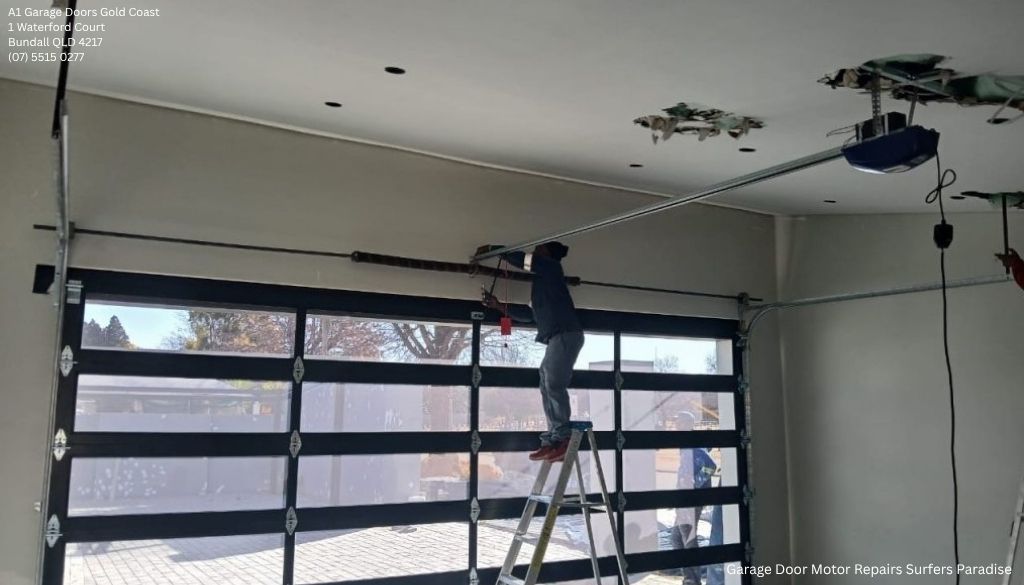
Repair begins when something requires adjustment, replacement, re-tensioning, realignment beyond simple correction, or work near loaded components. Garage door springs, especially torsion springs, deserve particular respect. Springs help counterbalance the door’s weight. If the door is hard to lift, drops too quickly, or will not stay in position, garage door balance may be involved. That is not a cosmetic concern. Balance affects how the opener works and how safely the door moves.
A common mistake is treating the garage door opener as the muscle of the system. The opener is not meant to compensate for a door that is binding, badly balanced, or mechanically compromised. When the opener strains against a door that should move more freely, replacing the opener may only mask the problem for a while. Good garage door troubleshooting asks whether the door itself is operating correctly before blaming the motor.
Safety reversal is not a small detail
Automatic garage door opener safety systems are easy to take for granted because they sit quietly until needed. Photoelectric sensors are often mounted near the bottom of the door opening. Their job is to help detect an obstruction in the closing path. If that beam is interrupted, the opener should not keep driving the door downward. Entrapment protection may take other equivalent forms, but the principle is the same: the door must not continue closing in a way that creates a preventable hazard.
Safety reversal systems should be tested monthly. That frequency may surprise people, but it makes sense when you consider the environment. Garages are dusty. Storage boxes shift. Children’s bikes get leaned against tracks. Sensor brackets can be bumped. A system that worked last season may not be working today.
If the door fails to reverse during a proper safety test, stop treating the door as normal. The owner’s manual may provide adjustment instructions for specific opener models. If the issue is not immediately clear or the adjustment does not resolve it, call for a professional garage door inspection. This is one area where “I’ll get to it later” is a poor risk calculation.
Children should also be taught that a garage door is not a toy, not a race timer, and not something to duck under. Remote controls should be kept out of their reach. Those habits may sound basic, but they are part of garage door safety just as much as sensors and opener settings. A well-maintained system still depends on people using it sensibly.
What you can reasonably check yourself
There are a few checks that help you make a better decision without putting your hands where they do not belong. These are observations and simple safety-focused checks, not invasive repairs.
These checks are useful because they do not require loosening cables, adjusting springs, removing hardware, or working at ceiling height. They also create better information for a professional if you decide to call one. “It makes a noise” is less useful than “it reverses halfway down, the sensors appear clear, and the opener sounds strained at the same point in travel.”
When a professional inspection is the smarter first move
There are times when professional inspection should come before repair attempts. The most obvious is a failed safety reversal test. Non-reversing garage door openers have been identified as hazards, and automatic doors have been involved in fatal entrapment incidents. That reality changes the standard of care. If the safety feature is not working, the door needs prompt attention.
A professional should also inspect the system when the door is uneven, the cables look damaged or loose, the springs appear suspect, or the door no longer feels balanced. Garage door cables and springs work as part of the lifting system. They are not decorative hardware. If one side of the door sits lower than the other, or the door appears to rack in the tracks, forcing operation may worsen the damage.
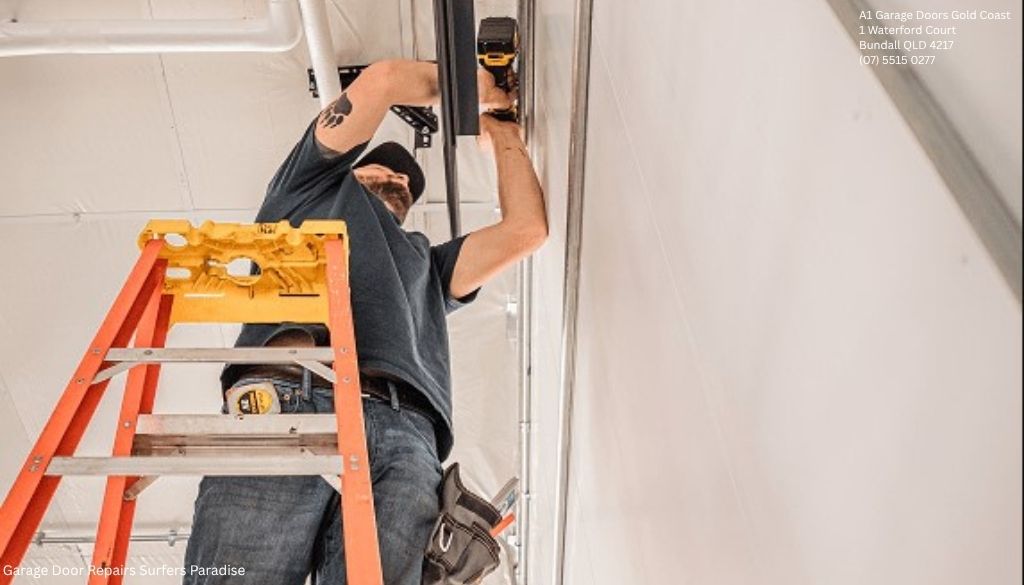
Work near the ceiling also deserves caution. Installation and repair work can involve physical hazards from working overhead, cramped spaces, hand tools, and awkward body positions. Anyone who has spent time under a half-open door with a ladder nearby understands how quickly a small misstep can become a bad day. Professional crews are not immune to risk, but they are trained to stage the work, use appropriate tools, and recognize when a door should be secured before adjustments begin.
A garage door opener replacement is another place where inspection can prevent a wrong purchase. If the door is hard to move because the balance is off, a new opener may not solve the underlying problem. If the tracks are damaged, the rollers worn, or the door itself is no longer moving cleanly, the opener becomes the victim rather than the culprit. Before paying for garage door replacement or a new opener, it is worth knowing whether the existing system can be safely repaired.
Professional garage door inspection also makes sense after an impact. A vehicle bump, even a slow one, can affect tracks, panels, rollers, and alignment. The door may still open once or twice, which gives a false sense of security. The question is not whether it moved immediately after the impact. The question is whether the system remains aligned, balanced, and safe under repeated use.
The trouble with “it still works”
Some of the most expensive garage door repair calls begin with a sentence every technician recognizes: “It was doing this for a while, but it still worked.” A door can continue moving while parts are wearing unevenly. An opener can keep pulling while the door resists. Rollers can wobble in their tracks. Sensors can work intermittently. A cable can look questionable before it becomes an urgent problem.
“It still works” is not the same as “it is safe and sound.” Garage doors operate through repeated movement, vibration, and load transfer. Small faults tend to spread. A track issue can stress rollers. Poor balance can strain the opener. A sensor problem can encourage people to bypass or ignore a safety feature, which is exactly the wrong habit.
This is where judgment matters. If a door makes a light squeak during seasonal weather changes and otherwise moves smoothly, maintenance may be enough. If the noise is paired with jerky movement, visible rubbing, uneven travel, or opener strain, the situation has changed. The symptom is no longer isolated.
Intermittent problems deserve special respect. A garage door that reverses only sometimes, closes only when the wall button is held, or behaves differently from day to day is telling you the system is not reliable. Intermittent safety devices are still safety concerns. A professional inspection can catch conditions that are hard to reproduce during a quick homeowner check.
Deciding between repair, inspection, installation, and replacement
The words can blur together, especially when a company offers all of them. Garage door repair usually means correcting or replacing a failed component so the existing door system works safely again. Garage door inspection means evaluating the system before deciding what work is needed. Garage door installation applies when a door or opener is being installed as new equipment. Garage door replacement is broader and usually means the existing door, opener, or major assembly is no longer the right candidate for repair.
The right path depends on condition, safety, and expected performance. A simple sensor obstruction does not justify replacing an opener. A non-reversing opener should not be ignored because the motor still runs. A noisy roller may call for maintenance or repair depending on wear and movement. A door with repeated alignment and balance problems may deserve a more serious conversation.
Cost is part of the decision, but it should not be the only part. The cheapest immediate fix can become expensive if it leaves a safety issue untouched. On the other hand, replacing major equipment without diagnosis wastes money. A good inspection protects both sides of that equation. It can prevent unnecessary garage door replacement, and it can also stop a homeowner from pouring small repairs into a system that is no longer dependable.
For newer systems, the owner’s manual is a valuable reference. It can explain normal safety testing, basic adjustments, and maintenance expectations. But manuals also have limits. They cannot see a bent track, a compromised cable, a poorly balanced door, or a sensor bracket that has shifted just enough to create inconsistent operation. Printed guidance helps, but it does not replace trained inspection when the symptoms point beyond routine care.
A practical decision guide
When the door misbehaves, the safest approach is to sort the issue by risk. Some observations point toward homeowner-level maintenance. Others point toward professional inspection before further use.
| Situation | Reasonable next step | |---|---| | Sensor area is visibly blocked and the door will not close | Clear the obstruction, then test normal operation and safety reversal | | Door fails to reverse during a safety test | Stop relying on the opener and arrange professional inspection or follow the owner’s manual if the fix is clearly specified | | Door moves unevenly, hangs crooked, or appears out of the tracks | Do not force operation, schedule professional inspection | | Opener strains but the door seems heavy or hard to move | Have the door balance and mechanical system inspected before replacing the opener | | New noise appears with smooth movement and no safety failure | Perform appropriate maintenance, then monitor closely | | Noise appears with jerking, scraping, or repeated reversal | Arrange inspection before the problem spreads |
A table can make the decision look neat, but real garages are messy. You may have more than one symptom. A sensor may be blocked and the tracks may also be dirty. A door may need lubrication and still have a balance issue. When symptoms overlap, choose the safer category. The cost of an inspection is easier to accept than the cost of guessing wrong around a heavy moving door.
Why garage door balance matters so much
Garage door balance is one of the most misunderstood parts of the system. People see the opener moving the door and assume the opener lifts the full weight. In a properly functioning system, the lifting system and springs help counterbalance the door so it can move in a controlled way. When balance is wrong, the opener may work harder, the door may travel unevenly, and other components may wear faster.
Torsion springs are common in many garage door systems, and they are under significant tension. That tension is precisely why they can help lift the door, and precisely why casual adjustment is a bad idea. The same caution applies to garage door cables. They are part of a loaded system, and a mistake can be sudden.
A homeowner does not need to understand every mechanical detail to make the right decision. If the door feels unusually heavy, drops faster than expected, will not stay in position, or appears uneven, the balance deserves professional attention. This is not the place to improvise with online advice and basic hand tools.
Balance also affects garage door opener life. An opener connected to a poorly balanced door may still run, but it is being asked to do work it was not intended to do. If you replace the opener without correcting the door, the new unit inherits the same bad conditions. That is why reputable repair decisions often start with the door itself, then move to the opener.
Sensors, openers, and the temptation to bypass
Few garage door issues frustrate homeowners more than a door that will not close because the sensors disagree with reality. The opening is clear, the car is out of the way, and yet the door refuses to cooperate. At that moment, bypassing the safety system can feel like common sense.
It is not.
The entrapment protection requirement for residential automatic openers exists because the closing door can create a serious hazard. If a sensor is blocked, misaligned, dirty, damaged, or wired incorrectly, the answer is to correct the fault, not defeat the protection. Holding a wall button according to a manufacturer’s intended temporary control behavior is not the same as deciding the sensors are optional. If the system repeatedly refuses to close, the sensors need attention.
Sometimes the fix is simple. A storage bin was shoved into the beam path. Dust or spider webs collected on a lens. A child’s scooter was parked in just the wrong place. Other times, the problem is less obvious. A bracket may be slightly out of position, or the opener may need adjustment according to its manual. If basic clearing and cleaning do not resolve the issue, professional inspection is the safer choice.
The same logic applies to remote controls. Keep them away from children, and treat them as controls for a powerful moving system rather than convenience gadgets. A child pressing a remote from inside the house or car may not understand who or what is near the door. Good garage door safety includes both mechanical function and household rules.
When garage door installation should not be a weekend experiment
Some homeowners are skilled, careful, and comfortable with tools. That still does not make every garage door installation a suitable weekend project. Installation and repair can involve overhead work, awkward postures, cramped spaces, and hand tool risks. Add a large moving door and spring systems, and the margin for error narrows.
The issue is not only whether the door can be assembled. It is whether it is installed level, aligned in the tracks, balanced correctly, connected to the opener properly, and tested for safe reversal. A door can look acceptable and still behave poorly under load. An opener can be mounted and powered while the door system underneath it remains wrong.
There are limited tasks a capable homeowner may reasonably handle, such as reading the manual, keeping the work area clear, and performing routine safety checks after installation. But when the job involves springs, cables, track alignment, or opener setup that affects entrapment protection, professional installation or inspection is often the better value. A garage door is used hundreds or thousands of times over its service life. Small installation errors get repeated with every cycle.
Maintenance that actually helps
Good garage door maintenance is not dramatic. It is regular, observant, and modest. The most valuable habit is paying attention to changes. A door that suddenly sounds different deserves a look. A sensor that gets bumped should be checked. A safety reversal test should not wait until something feels wrong.
Monthly safety reversal testing is especially important for automatic openers. The test should be done as directed by the owner’s manual, and the result should be taken seriously. If the door does not reverse when it should, adjust only as the manual allows or call a professional. Guesswork around safety systems can create a false sense of protection.
Keep the door opening clear. Garages tend to become overflow storage, and the area near the tracks and sensors is easy to clutter. Boxes, garden tools, bikes, and sports equipment can interfere with movement or block sensors. Even if the door has always cleared a particular object, do not rely on tight margins around a moving door.
Lubrication belongs in the maintenance conversation, but it should not become a cure-all. Use the correct product and locations specified for the system. If lubrication changes nothing, or if the noise returns quickly, the door is asking for diagnosis. A quiet door is not automatically a safe door, and a noisy door is not always failing, but sound is often the first clue homeowners notice.
What to tell a technician when you call
A professional garage door inspection is more productive when you describe the symptom clearly. You do not need technical language, although terms like garage door rollers, garage door tracks, garage door springs, and garage door sensors help if you are confident about what you are seeing. More important is the pattern.
Say when the problem started. Mention whether it happens opening, closing, or both. Explain whether the door reverses, stops, jerks, or makes a new sound. Note whether the opener light flashes or whether the wall control behaves differently from the remote. If you tested the safety reversal system and it failed, say so directly. If the door was hit by a vehicle or object, do not leave that residential garage door repairs Gold Coast out because the door “seemed fine afterward.”
Also mention anything you already tried. If you cleaned the sensors, cleared the opening, or checked the manual, that information saves time. If you used lubrication, say where. A good technician will inspect rather than rely solely on your description, but accurate history helps them focus.
Do not minimize safety issues out of embarrassment. Many garage door problems come from ordinary household use: a child bumps a sensor, a trash can clips a track, a remote falls into the wrong hands, a stored item shifts. The point of inspection is not blame. It is restoring safe operation.
The safest answer is often the most disciplined one
Deciding between garage door repair and professional inspection is not about being handy or helpless. It is about recognizing which parts of the system are safe to observe and maintain, and which parts can create real risk if handled casually.
If the problem is a blocked sensor, a dirty lens, or a need for routine maintenance, careful homeowner action may be enough. If the door fails a safety reversal test, moves unevenly, appears out of balance, strains the opener, involves springs or cables, or follows an impact, professional inspection is the better first step. That approach protects the people in the home, preserves the equipment, and often prevents a small fault from becoming a larger repair.
A garage door should open and close smoothly, reverse when it must, and respond predictably every time. When it stops doing those things, do not force it and do not guess at high-risk components. Start with observation, respect the safety systems, use the owner’s manual where appropriate, and bring in a professional when the symptoms point beyond basic maintenance. That is the difference between a quick fix and a sound decision.