Garage Door Sensors Guide for Monthly Opener Testing
A garage door opener is easy to take for granted. Press the wall button, hear the motor, watch the door move, and move on with the day. That routine is exactly why monthly opener testing matters. The system works in the background until it does not, and when it fails, the risk is not theoretical. Automatic residential garage door openers are subject to a mandatory federal safety standard in the United States, and that standard requires entrapment protection, such as a photoelectric “electric eye” sensor or an equivalent safety system.
That requirement exists because a moving garage door can injure or trap a person if the opener does not reverse properly. Safety features are not decorative add-ons. They are part of the garage door system, just like the motor, the door sections, the garage door tracks, the garage door cables, and the garage door springs. Monthly testing is the homeowner’s practical way to confirm that the protection built into the opener still responds when needed.
I have seen many garage doors that looked fine at a glance but failed basic garage door safety checks. The opener light worked. The remote worked. The door opened and closed. Yet the reversing function did not respond correctly during testing. That is the exact scenario monthly testing is meant to catch, before someone assumes the system is safe simply because it moves.
Why garage door sensors deserve monthly attention
Garage door sensors are part of an entrapment protection system. In common residential use, photoelectric sensors send and receive a beam across the path of the door. If something interrupts that beam while the door is closing, the opener should stop and reverse. The purpose is simple: the door should not continue closing when the safety system detects an obstruction.
The federal safety standard for automatic residential garage door openers requires a sensor or an equivalent entrapment protection system. That requirement changed the expectations for garage door opener safety. A modern opener is not supposed to rely only on a person noticing danger and releasing a button. It must include a safety reversal system designed to reduce entrapment hazards.
Monthly testing is recommended because safety devices can be present but not functioning correctly. A sensor can be installed and still fail to protect. An opener can operate every day and still fail a reversal test. Wiring, alignment, adjustment, physical damage, age, or improper setup can all turn a safety feature into false reassurance. Some of those causes are obvious during a garage door inspection. Others are not.
The key point is that testing should not be reserved for moments when the door is already acting strangely. A non-reversing garage door opener is a recognized hazard. If the door does not reverse when it should, the system should be adjusted according to the owner’s manual or inspected by a qualified professional. Continuing to use it normally while hoping the issue clears itself is poor garage door maintenance and poor risk management.
The monthly test is not a formality
A good monthly opener test checks whether the door reverses when it encounters an obstruction and whether the photoelectric sensors are installed and working. The test is not about proving the motor is strong enough to move the door. It is about proving the system responds safely when the closing path is not clear.
Many homeowners misunderstand what “working” means. If the remote opens the door from the driveway, they call the opener good. If the wall control closes the door, they assume the sensors are fine. That is not enough. The meaningful test is whether the opener reverses when closing onto an obstruction, and whether the sensor system interrupts closing when it should.
A monthly rhythm also helps you notice changes. Maybe the opener used to reverse immediately and now hesitates. Maybe the door used to run smoothly and now shudders in the tracks. Maybe the sensors look bumped out of position after boxes were moved in the garage. None of those observations automatically identifies the problem, but they give useful context for garage door troubleshooting.
Testing also reinforces household habits. Children should be taught garage-door safety, and remote controls should be kept out of their reach. That guidance is easy to say and easy to forget. A monthly test is a useful reminder that the garage door is a moving mechanical system, not a toy and not a harmless convenience.
A careful monthly opener test
The safest test is deliberate and unhurried. Do it when you are not trying to leave for work, not during a storm, and not while children or pets are moving through the garage. The goal is to observe the door and opener, not to rush through a chore.
That short sequence keeps the focus where it belongs: sensor response, reversal response, and corrective action. If you do not have the owner’s manual, it is worth getting the exact manual for your model rather than guessing. Opener designs vary, and safety adjustment procedures should not be improvised.
Do not defeat the sensors to make the door close. Do not tape a sensor, hold a button in a way that bypasses normal operation, or treat repeated failure as a nuisance. A safety system that prevents the door from closing may be doing its job, or it may be signaling a fault that needs attention. Either way, bypassing it removes a layer of protection.
What a passing test tells you, and what it does not
A passing test gives you confidence that the opener’s entrapment protection responded at that moment. It does not mean the entire garage door system is in perfect condition. The opener and sensors are only part of the assembly. Garage door springs, torsion springs, garage door rollers, garage door cables, hinges, tracks, brackets, and the door sections all affect how the door moves.
This distinction matters because a door can pass a sensor test and still need garage door repair. For example, if the door is noisy, uneven, unusually heavy, or rough in the garage door tracks, the opener may be compensating for a mechanical issue. The opener is not designed to cure a poorly balanced or damaged door. It is a control system attached to a large moving object.
Garage door balance is especially important. A balanced door moves as the manufacturer intended, while an unbalanced one can strain the opener and create unpredictable movement. Testing opener safety does not replace a broader garage door inspection. It simply confirms one critical safety function.
A passing monthly test also does not remove the need for sensible use. Keep people away from the moving door. Keep remote controls out of children’s hands. Do not race under a closing door. Do not leave children to play with the wall button. The safest garage door is the one that is maintained, tested, and respected.
When the opener does not reverse
If the opener fails a reversal test, treat that result seriously. A non-reversing garage door opener is a hazard. The next step is not to keep cycling the door repeatedly in frustration. Repeated operation can hide the original symptom, create new wear, or encourage someone to work around the safety system.
The proper path is adjustment according to the owner’s manual or inspection by a professional. That recommendation may sound conservative, but it comes from the nature of the system. Garage doors combine electricity, moving hardware, spring tension, and overhead components. Work at ceiling height and in cramped spaces introduces physical hazards. Repair and installation tasks may involve awkward postures, hand tools, and limited visibility. Those conditions favor careful, staged work rather than guesswork.
A homeowner can reasonably check for obvious issues. If an object blocks a sensor, remove it. If stored items have been pushed into the sensor path, clear the area. If the sensor lenses are visibly dirty, clean them gently. But when the problem involves adjustment, wiring, mounting, opener force settings, damaged parts, or inconsistent reversing, the line between simple garage door maintenance and real garage door repair appears quickly.
There is also a judgment call around age and condition. If an opener lacks required entrapment protection or has a safety system that cannot be made reliable, garage door replacement or opener replacement may be the safer long-term decision. The same is true when repeated service calls reveal a system that no longer performs consistently. Repair is appropriate when it restores dependable function. Replacement becomes reasonable when reliability cannot be trusted.
Sensors are part of a system, not the whole system
It is tempting to talk about garage door sensors as if they alone determine safety. They do not. They are one critical piece within a larger set of safeguards and mechanical conditions.
A photoelectric sensor can stop and reverse a closing door when its beam is interrupted, but it does not repair worn garage door rollers. It does not straighten damaged garage door tracks. It does not correct a broken cable. It does not rebalance a door or relieve stress from garage door springs. A good safety sensor can reduce entrapment risk, but it cannot make a neglected door mechanically sound.
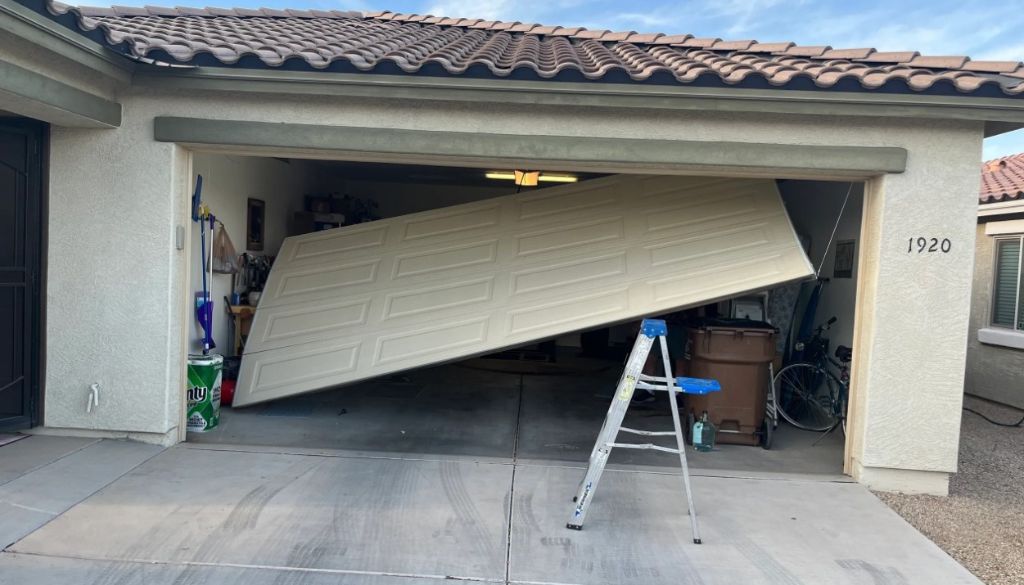
This is why monthly opener testing pairs naturally with periodic garage door inspection. During a basic visual check, look for changes rather than trying to diagnose every component. A door that has started moving unevenly, scraping, jerking, or sounding different deserves attention. A door that appears to hang crooked, struggles to close, or requires repeated button presses may be signaling a problem beyond the sensors.
Garage door lubrication is another example of system maintenance that should be handled thoughtfully. Lubrication may reduce friction on appropriate moving parts when done according to the door and opener manufacturer’s guidance, but it is not a cure-all. Lubricating the wrong area or using maintenance as a substitute for repair can make matters worse. If the door’s movement has changed noticeably, lubrication should not be used to mask the symptom without understanding it.
The opener itself also deserves respect. It is not a lifting winch meant to overcome every mechanical fault. When a door is binding, out of balance, or damaged, the opener may still manage to move it for a while. That does not mean the system is healthy. It means the motor is working against conditions that should be corrected.
The household side of garage door safety
A monthly test works best when everyone in the home understands why it matters. Garage doors are often located where daily life is messy: bikes leaning near the wall, storage bins stacked along the sides, children moving between the house and driveway, pets slipping through open spaces. The garage can feel informal, but the door is still a heavy moving barrier controlled by a motor.
Children should be taught not to play near the door, not to run under a moving door, and not to treat remotes or wall controls as toys. Remote controls should be kept out of their reach. This advice is straightforward, yet it is one of the most important parts of garage door safety because many unsafe situations start with casual behavior rather than mechanical failure.
Adults need habits too. Watch the door close instead of pressing the remote and walking away. Keep the doorway clear. Avoid storing items where they can shift into the sensor path. Do not ignore an opener that behaves inconsistently. If the door reverses unexpectedly, stops partway, or refuses to close, investigate rather than forcing it.
A well-maintained opener should feel predictable. When it stops feeling predictable, the safest assumption is that the system needs attention. That may be a simple obstruction near the sensors, or it may be a more serious issue. Either way, the monthly test gives you a structured reason to look before the problem becomes routine.
Garage door installation and sensor setup
Garage door installation is not just about hanging a door and connecting an opener. The safety system must be installed and working. Since residential automatic openers are required to include entrapment protection such as photoelectric sensors or an equivalent system, installation quality directly affects safety.
A careful installer does not treat the sensors as an afterthought. The opener must be set up so the safety reversal system functions as intended. The door should travel properly, the opener should respond correctly, and the safety checks should be performed before the job is considered complete. A newly installed opener that has not been tested is unfinished from a safety standpoint.
The same principle applies after garage door replacement. Replacing a door can change how the system behaves. Weight, balance, hardware condition, and opener setup all need to work together. If an old opener remains in service after a door replacement, its safety features still need to be verified. If a new opener is installed, monthly testing should begin right away, not after the first problem appears.
Professional work also benefits from staged, careful practices. Installation and repair often take place at ceiling height, in tight areas, and around tools and moving parts. Rushing creates risk for the worker and for the finished system. Good garage door service is methodical because the consequences of poor adjustment are not limited to noise or inconvenience.
Common sensor and opener trouble signs
Some warning signs are subtle. Others are hard to miss. The important thing is to connect them with action rather than accepting them as normal.
| What you notice | Why it matters | Sensible next step | |---|---|---| | The door closes partway, then reverses | The sensor path may be interrupted, or the opener may be responding to a fault | Check for obvious obstruction, then test the system | | The opener runs, but the door behaves inconsistently | The issue may involve the opener, door movement, or hardware condition | Stop forcing operation and arrange inspection if it persists | | The safety test fails | A non-reversing opener is a hazard | Follow the manual or call a professional | | Sensors are present but appear disturbed | Entrapment protection may garage door repair not work correctly | Do not assume they work, test them | | The door movement has changed | Mechanical parts may need attention | Include tracks, rollers, cables, and balance in the inspection |
A table can make the patterns look tidy, but real garage door troubleshooting is often messier. One symptom can have more than one cause. A door that reverses may have a sensor issue, an opener adjustment issue, or a mechanical problem. A door that refuses to close may be protecting you from an unsafe condition. The test result tells you what happened, not always why it happened.
That is why the owner’s manual matters. It gives model-specific instructions for adjustment and testing. A professional technician brings the broader judgment needed when the issue crosses into springs, torsion springs, cables, tracks, or opener replacement. Those components should not be treated casually.
Where DIY judgment should stop
There is nothing wrong with a homeowner taking responsibility for monthly testing. In fact, that is the point. Owners are the people who see the door operate every day, and they are in the best position to notice changes early. But responsibility does not mean taking on every repair.
The most reasonable homeowner tasks are observation, basic clearing of obstructions, reading the manual, and performing the recommended safety tests. Beyond that, the risk rises. Garage door springs and torsion springs store energy. Garage door cables and tracks affect the movement of the door. Opener installation and adjustment involve overhead work and electrical equipment. Repair work can require tools, ladder positioning, and awkward body mechanics in a crowded garage.
A useful rule is to separate testing from repair. Testing tells you whether the safety system works. Repair changes the system. If you are not certain what a change will do, or if the task involves spring tension, cables, structural hardware, or opener setup beyond the manual’s plain instructions, professional garage door repair is the safer choice.
This is not about making every small issue sound dramatic. It is about knowing which mistakes carry real consequences. Replacing a remote battery is one category. Adjusting a system that failed a reversal test is another. Working around torsion springs is another still. The judgment comes from respecting the difference.
Building the monthly habit
The easiest monthly test is the one attached to something you already do. Some homeowners test the opener when they replace HVAC filters. Others do it on the first weekend of the month. The exact date matters less than consistency. A garage door opener can operate hundreds of times between annual home maintenance tasks, so a yearly glance is not enough.
Keep the test simple. Watch the door. Confirm the sensors are present and working. Confirm the door reverses when it should. Listen for changes. Look for disturbed hardware or unusual movement. If something fails, stop and address it.
It also helps to write down failures or service dates. You do not need a complex maintenance log. A note on your phone that says the opener failed the reversal test, the sensors were adjusted by a technician, or the door received professional service can be useful later. Patterns matter. A one-time obstruction is different from a recurring failure.
Monthly testing is also a good time to revisit how the garage is being used. Storage habits change. Children grow tall enough to reach controls. New drivers join the household. A remote that used to sit safely on a high shelf may now be clipped to a bicycle or left in an unlocked car. Garage door safety is partly mechanical and partly behavioral.
When replacement is the responsible repair
Garage door replacement and opener replacement are not the answer to every problem. Many systems can be adjusted, serviced, or repaired. But replacement becomes worth discussing when the opener lacks required safety protection, when the safety system cannot be made dependable, or when the door and hardware have deteriorated to the point that repair no longer delivers reliable operation.
A professional assessment should look at more than the opener motor. The condition of the door, tracks, rollers, cables, springs, balance, and safety sensors all affects the recommendation. Replacing only one part of a failing system may solve the immediate complaint while leaving the underlying risk in place.
The trade-off is cost versus confidence. A repair may be appropriate when the system is otherwise sound and the issue is isolated. Replacement may be appropriate when repeated issues, outdated safety features, or damaged hardware make continued use questionable. The right answer depends on the actual condition of the door and opener, not on a generic age rule.
What should not be negotiable is the safety reversal function. If the opener does not reverse properly, it needs correction before normal use continues. That standard is simple, practical, and grounded in the known hazard of non-reversing openers.
A safer garage door starts with one repeatable test
The monthly opener test is not complicated, but it carries real weight. Automatic residential garage door openers are required to include entrapment protection because a closing garage door can create serious danger when safety systems fail. Photoelectric garage door sensors, or an equivalent safety system, are there to prevent the door from continuing to close when the path is not safe.
Treat that system as something to verify, not something to assume. Test it monthly. Teach children to stay clear of the door and keep remotes out of their reach. Watch for changes in movement, sound, balance, and behavior. Use the owner’s manual for adjustment, and bring in a professional when the issue reaches beyond clear, simple maintenance.
A garage door that opens and closes is convenient. A garage door that reverses when it should is safer. The difference between those two statements is exactly why monthly testing belongs in every homeowner’s garage door maintenance routine.