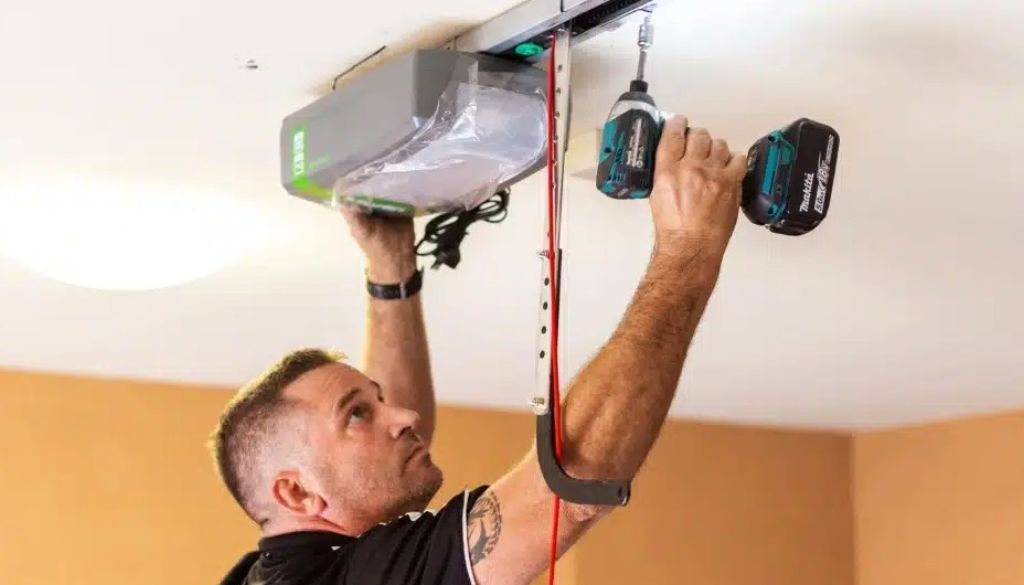
Garage Door Troubleshooting: What Common Noises May Be Telling You
A garage door is not supposed to be silent. Even a well-installed, well-maintained door has moving panels, rollers, hinges, cables, springs, tracks, and an opener all working together under load. A soft hum from the garage door opener, a brief click from the operator, or the steady roll of wheels through the tracks can be perfectly normal.
What deserves attention is a noise that changes. A squeak that grows sharper every week, a grinding sound near the opener, a sudden bang from above the door, or a rattle that appears after years of smooth operation is the door’s way of telling you something in the system has changed. Sometimes the answer is simple garage door lubrication. Other times, the sound points to a balance issue, worn garage door rollers, loose hardware, or a spring system that should not be touched without proper training.
Noise troubleshooting is useful because it helps a homeowner describe the problem clearly, catch minor wear before it becomes major damage, and know when to stop using the door. The goal is not to turn every homeowner into a garage door repair technician. The goal is to understand what the door may be saying and respond safely.
Start with where the sound comes from
Before trying to fix a noisy garage door, listen carefully. A garage door has several systems moving at once, and a sound can travel through the metal panels, tracks, and framing. What seems like a noise from the opener may actually start at a roller. What sounds like a panel problem may come from a hinge or track.
Stand inside the garage with the door closed. Run the door through one full open and close cycle while watching from a safe distance. Do not place hands near the tracks, rollers, hinges, springs, or cables while the door is moving. Pay attention to whether the noise happens when the door starts, halfway through travel, near the floor, or near the fully open position.
If the door uses an automatic garage door opener, it can help to compare powered movement with manual movement. Pulling the emergency release allows the door to be moved by hand, but only do this when the door is fully closed unless you are certain the door is properly balanced. A door with a broken spring or poor garage door balance can be extremely heavy and unpredictable. If you are unsure, leave the opener connected and call for service.
A useful rule is this: noises that repeat at regular intervals often involve rollers, hinges, or track contact. Noises that happen at the start or end of travel may involve the opener, track alignment, spring tension, or the door binding. A single loud event, especially a bang, deserves immediate caution.
Squeaking usually points to friction
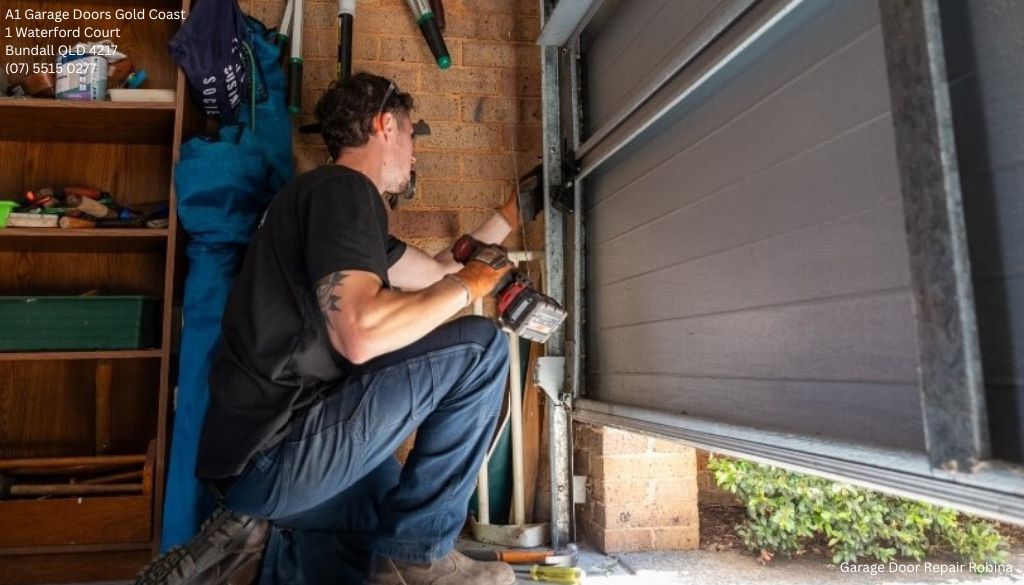
A high-pitched squeak is one of the most common homeowner complaints. It often comes from metal moving against metal at hinges, roller stems, spring coils, or other pivot points. Garage doors contain several friction points, and when those areas dry out or collect dirt, the sound becomes sharper.
Squeaking is most noticeable during seasonal changes, after long periods without maintenance, or when a door is used many times a day. The sound may start softly, then become part of every open and close cycle. If ignored, friction can increase wear on rollers, hinges, and other components.
What to check first
Look at the hinges between the door sections. These hinges pivot every time the door bends through the curved portion of the tracks. If the hinge barrels look dry or show dark buildup around the moving points, they are likely contributing to the noise. Garage door rollers can also squeak, especially where the roller stem passes through the hinge bracket.
Springs can produce a rubbing or squeaking sound as coils move. Torsion springs, which are mounted above the door, store and release energy to help balance the door’s weight. As the door opens, torsion springs unwind. A light lubricant on the spring coils can reduce surface friction, but spring adjustment is not a homeowner maintenance task. The spring system carries stored energy, and improper handling can cause serious injury.
Lubrication that actually helps
Use a silicone-based garage door lubricant on hinges, rollers, and springs. Avoid spraying tracks with heavy oil. Tracks guide the rollers, but rollers should roll through the track rather than slide through a greasy channel. Oil-based products can attract dirt, and grime in the track can create new noise and resistance.
A light application is enough. More lubricant does not mean better maintenance. Excess product drips onto the floor, collects dust, and can make the door messier to inspect later. After applying lubricant, run the door several times and wipe away extra residue.
One common mistake is reaching for a general-purpose water-displacing spray and treating it like a long-term lubricant. That may quiet a squeak briefly, but it is not the best choice for lasting garage door maintenance. A proper silicone-based product is better suited for the moving parts commonly found on residential doors.
Grinding sounds deserve closer attention
Grinding is different from squeaking. It is lower, rougher, and often feels mechanical rather than dry. A grinding garage door may have worn rollers, debris in the tracks, opener strain, or parts that are no longer moving in proper alignment.
If the grinding seems to come from the sides of the door, inspect the garage door tracks and rollers. Rollers should move smoothly without dragging. Tracks should be clean and free of obstructions. A small stone, hardened dirt, or damaged track edge can create an ugly noise every time a roller passes that point.
If the sound seems to come from the garage door opener, the door may be too heavy for the opener to move comfortably. The opener is designed to move a balanced door, not to lift the full dead weight of the door. Garage door springs do most of the lifting work by counterbalancing the door. When balance is poor, the opener strains, and grinding or laboring sounds may follow.
Why opener noise can be misleading
Homeowners often blame the opener first because it has the motor. That is understandable, but many opener complaints begin with the door itself. If rollers bind in the tracks, hinges resist movement, or the spring system no longer balances the door correctly, the opener has to work harder.
A door that moves smoothly by hand but makes noise only under power may point more directly to the opener or its connection to the door. A door that grinds or binds by hand has a door-system issue, not just an opener issue. In either case, continuing to run the system while it struggles can accelerate wear.
Automatic garage door openers in the United States are required to meet entrapment-protection requirements for units manufactured on or after January 1, 1991. That safety framework matters, but it does not make a noisy or binding door harmless. Safety systems depend on proper installation, use, and maintenance. A door that does not move freely should be inspected before it becomes a bigger problem.
Rattling often comes from looseness
A rattling garage door can be irritating, especially on attached garages where sound travels into living spaces. Rattles are commonly caused by loose hardware, worn rollers, vibrating tracks, or panels moving more than they should.
Garage doors move through repeated cycles, and vibration can loosen fasteners over time. Hinges, brackets, and track supports are all possible sources. The opener rail and mounting hardware can also vibrate if the door is not moving smoothly.
A safe homeowner inspection
With the door closed, look over the visible fasteners on hinges and track brackets. Do not remove brackets, do not loosen spring-related hardware, and do not adjust cables. Garage door cables and springs are part of the counterbalance system, and they should be treated with caution.
A basic visual and listening check can still be useful:
If a hinge screw is slightly loose in a normal door section, tightening it may quiet the door. If the screw no longer grips, or if the metal around the hinge is cracked or distorted, the issue goes beyond simple tightening. If the rattle involves the bottom brackets, cables, spring shaft, or anything under tension, stop and call a qualified technician.
Popping and snapping can mean panels or springs are under stress
A popping sound may come from door sections shifting as they move through the curved tracks. Sometimes a panel flexes slightly, then releases with a pop. This can happen when hinges are stiff, rollers bind, or the door is not traveling evenly on both sides.
A snap or pop near the torsion spring area above the door is more concerning. Springs store energy to balance the door’s weight. A torsion spring system is designed to wind and unwind as the door moves. Noise from this area may be simple friction between coils, but it may also indicate a spring nearing the end of its service life or a balance problem.
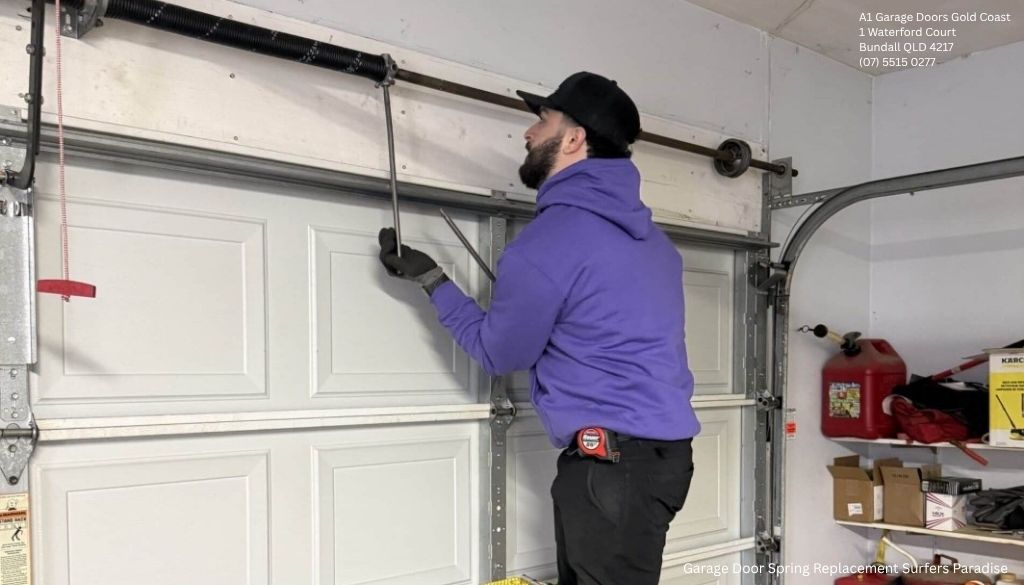
Do not attempt to adjust torsion springs. The fact that the spring is visible does not make it safe to handle. Spring work is one of the clearest boundaries between homeowner maintenance and professional garage door repair.
When a pop becomes an immediate stop
If the door suddenly becomes very heavy, opens only a few inches, closes crooked, or the opener strains and stops, do not keep pressing the remote. A broken spring or cable problem may be present. The opener may be strong enough to move the door a little, but using it that way can damage the opener and create a safety hazard.
A loud bang from the garage is often described by homeowners as sounding like something fell against the door. In many cases, that kind of sudden sound can be associated with a spring failure. The door may remain closed, and nothing may look wrong at first glance. If you see a visible gap in a torsion spring above the door, or if the door feels unusually heavy, do not operate it.
Scraping sounds suggest contact where there should be clearance
A scraping garage door usually means one part is rubbing against another. The door may be contacting the track, a roller may be dragging, a hinge may be distorted, or the door may be out of alignment. Scraping can also occur if a track has been bumped by a vehicle, storage item, lawn equipment, or even repeated minor impacts.
Garage door tracks guide movement. They are not meant to carry the entire weight of the door by force. When a track is bent or the door shifts, rollers can scrape along the inside edge instead of rolling cleanly.
A slight scrape at one point in travel may be caused by a local obstruction or minor track issue. A scrape that runs through most of the door’s movement suggests a larger alignment or roller problem. If the door rubs hard enough to slow down, reverse unexpectedly, or shake, stop using it until it is inspected.
Cleaning tracks without creating new problems
Tracks can be wiped clean with a dry or slightly damp cloth. Remove dirt, leaves, cobwebs, and hardened debris. Do not pack the tracks with grease. The rollers need a clean path, and lubrication belongs mainly on moving pivot points and suitable roller components, not as a thick coating inside the track.
While cleaning, look for shiny scrape marks. Fresh bright metal often shows where contact is happening. If the same mark appears on both sides at the same height, the issue may relate to door position or a repeated point of stress. If only one side shows damage, a track, roller, hinge, or cable issue may be affecting that side.
Clicking sounds may be normal, until they change
Some clicking is expected. Opener relays, light housings, remote signals, and safety sensor circuits can all make small sounds. Hinges may click lightly as the door sections bend. The question is whether the click is new, loud, repetitive, or paired with a movement problem.
A single click from the opener with no door movement may mean the opener is receiving a command but the system is not operating normally. The cause could be electrical, mechanical, or safety related. If the door tries to close and reverses, look at the garage door sensors. Modern safety systems commonly use a sensor or electric eye near the bottom of the door opening to reverse the door if someone or something enters the closing path.
Sensor issues are not always noisy, but they often show up as a door that will not close properly. A homeowner may hear a click from the opener, see the light flash, or watch the door start down and return upward. Misaligned sensors, blocked sensor paths, or dirty lenses can all interfere with operation.
Sensor checks that do not require tools
Photoelectric safety sensors are usually mounted near the floor on both sides of the door opening. They need a clear line across the opening. Boxes, bicycles, leaves, or even a trash bin can block the beam. The sensor lenses should be clean and aimed at each other.
Do not bypass garage door sensors to silence a problem. Entrapment protection exists because a closing garage door can injure people, pets, and property. Safety depends not only on having the equipment installed, but also on keeping it correctly aligned and functional.
If the door closes only when you hold the wall button, or if it reverses with nothing in the way, sensor alignment or wiring may be involved. Some homeowners can correct a bumped sensor bracket by gently realigning it, but damaged wiring, unreliable operation, or repeated failures call for service.
Thumping can come from rollers, hinges, or door sections
A rhythmic thump often points to something rotating or passing a specific point. Worn garage door rollers can create a thump each time they turn or cross a track joint. A damaged roller may have a flat spot, wobble, or resist movement. Hinges can also thump if they are loose or worn enough to let sections shift abruptly.
Thumping may become more obvious as the door travels through the curved portion of the tracks. That area forces the door sections to change angle, so weak hinges and rough rollers reveal themselves there. A door that thumps at the same height every time may be reacting to a particular track area or hinge location.
If the door has many noisy rollers, replacement may make more sense than repeated lubrication. Lubricant can reduce friction, but it cannot restore a damaged roller or correct a worn bearing surface. Roller replacement can improve noise and movement, but the work should be approached carefully because some roller brackets are close to cable and spring-related parts.
Humming from the opener can mean resistance
A garage door opener normally hums while running. A strained hum is different. It may be deeper, longer, or paired with slow movement. Sometimes the opener hums but the door does not move.
The opener should not be treated as the muscle that lifts an unbalanced door. The spring system balances the door’s weight so the opener can guide movement. If the door is poorly balanced, the opener may hum, grind, stop, or reverse. Continuing to use it can shorten opener life.
A balance check can reveal a lot, but it must be done carefully. With the door closed, disconnecting the opener and lifting the door by hand can show whether it moves smoothly and stays partly open. A properly balanced door should not feel like dead weight. If garage door installation services it slams down, shoots up, or cannot be lifted safely, the spring system needs professional attention.
Because garage door springs and cables store or control significant force, balance correction is not a do-it-yourself adjustment. A homeowner can observe symptoms. A qualified technician should adjust or replace the spring system.
Banging or slamming is a safety warning
A door that slams closed is not merely noisy. It is unsafe. Slamming can happen when springs no longer counterbalance the door properly, when cables are damaged or off their drums, or when the door is otherwise moving without proper control.
If a door drops quickly, do not stand under it, do not try to catch it, and do not keep operating it. A residential garage door can be heavy, and the counterbalance system is what makes it manageable. When that system fails, the door’s weight becomes obvious very quickly.
A banging sound at the end of travel may also come from opener force settings, track issues, or a door hitting the floor harder than it should. Even then, the correct response is inspection, not guessing. A door that closes with excessive force can damage panels, hardware, and the opener. More importantly, it can defeat the safe, predictable movement homeowners depend on.
How noise relates to garage door balance
Garage door balance sits behind many noise complaints. When the door is balanced, rollers move more smoothly, hinges flex with less strain, and the opener works within its intended role. When balance is off, every component feels the difference.
Torsion springs are commonly used on heavier or high-use doors because they provide controlled counterbalance from above the door. As the door opens, the torsion springs unwind and help carry the load. If the spring system is not doing its job, the garage door guide opener and hardware absorb extra stress.
Balance problems can sound like opener strain, roller grinding, panel popping, or track scraping. That is why noise troubleshooting should not focus only on the loudest part. A noisy roller may be worn, but it may also be suffering because the door is not moving evenly.
A practical maintenance rhythm for quieter operation
Most noisy doors benefit from regular garage door inspection and maintenance. The homeowner’s role is to keep visible, accessible parts clean, lubricated, and observed. The professional’s role is to handle high-tension parts, major adjustments, spring replacement, cable repair, and installation concerns.
A sensible maintenance rhythm includes watching the door operate, listening for changes, cleaning tracks, lubricating moving parts with the correct product, and testing safety systems. This does not need to be complicated. Ten focused minutes every few months can catch many issues before they become urgent.
Use this short checklist when the door is closed and the area is clear:
If a sound disappears after cleaning and proper lubrication, keep monitoring it. If it returns quickly, the underlying part may be worn rather than merely dry. If lubrication changes the sound but does not solve it, that information is still useful for a technician.
When noise appears after garage door installation or replacement
A new garage door installation or garage door replacement should operate smoothly, but “new” does not always mean “silent.” Fresh hardware may have a different sound than the old system. New panels, rollers, and tracks can change the acoustics of the garage. An opener connected to a new door may also sound different because the door weight and balance characteristics have changed.
That said, loud grinding, scraping, slamming, or repeated reversing is not normal simply because the door is new. Installation quality matters. Tracks must guide the door correctly, rollers must move freely, springs must balance the door, and safety devices must be properly installed and maintained.
Certified products and qualified installation are especially important when automated operators are involved. Safety standards exist because garage doors are large moving systems with entrapment risks. If a newly installed door is noisy in a way that suggests binding or poor balance, have it corrected promptly rather than waiting for parts to “break in.”
What not to ignore
The most expensive garage door problems often begin as minor changes. A squeak becomes a grind. A rattle becomes a loose hinge. A dragging roller becomes a bent track. An opener that strains for weeks eventually fails.
The sounds that deserve the fastest response are those tied to uncontrolled movement or high-tension parts. A loud bang from the spring area, a door that suddenly feels heavy, loose or frayed-looking garage door cables, a door that closes too fast, or a door that sits crooked in the opening should stop normal use until inspected.
Noisy operation near the bottom of the door also deserves caution because safety sensors, bottom brackets, and cables all live in that general system. Homeowners can clean sensor lenses and clear obstructions, but they should not bypass safety equipment or alter cable hardware.
Turning a noise into a useful repair description
When you do call for garage door repair, a clear description saves time. Instead of saying the door is “loud,” describe the type of noise, where it seems to come from, and when it happens. For example, “There is a scraping sound on the right side halfway up,” is more useful than, “It sounds bad.” “The opener hums but the door barely moves,” points the inspection in a different direction than, “The hinges squeak near the top.”
Mention whether the noise began suddenly or gradually. A sudden bang followed by a heavy door suggests a different level of urgency than a squeak that developed over six months. Also mention recent changes, such as a bumped track, new opener, recent garage door installation, power outage, or storage item that may have blocked the sensor path.
Good troubleshooting is partly mechanical and partly observational. The more accurately you observe the door, the easier it is to separate routine garage door maintenance from a repair that needs immediate professional attention.
A quieter door is usually a healthier door
Noise is not just an annoyance. It is feedback from a system that depends on balance, alignment, lubrication, and safety controls. Squeaking may ask for proper lubrication. Grinding may point to worn rollers or opener strain. Rattling may reveal loose hardware. Scraping may show track contact. Banging may warn of spring or cable trouble that should not wait.
The best habit is to treat changes in sound as early information. Watch the door move, keep the tracks clean, use the right lubricant, test the garage door sensors, and respect the parts that store force. A garage door that opens smoothly, closes predictably, and sounds consistent is easier on the opener, safer for the household, and less likely to surprise you with an urgent repair.