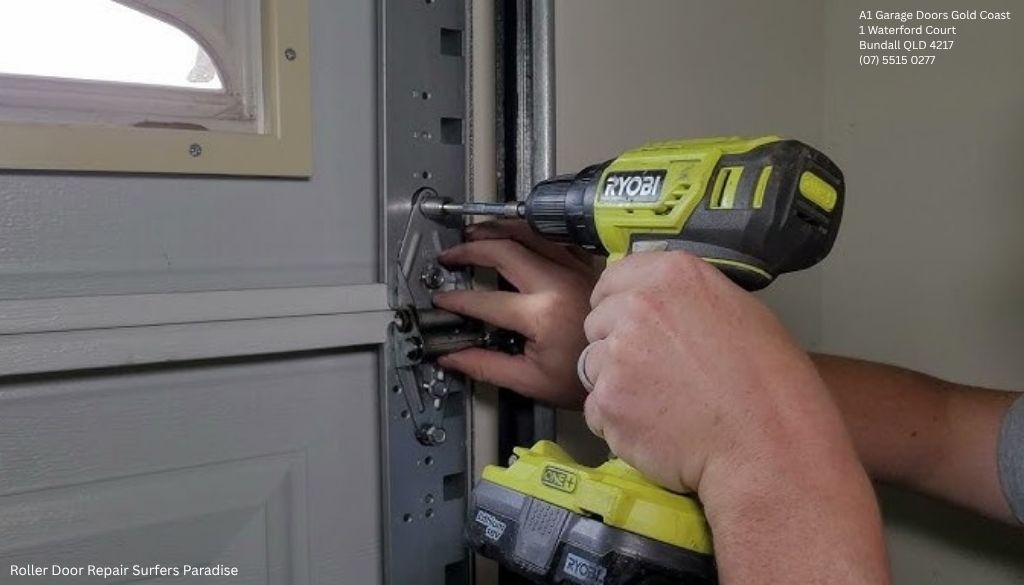
Garage Door Cables Guide for Safer Repair Decisions
Garage door cables do not usually get attention until something looks wrong. A door hangs crooked. The opener strains. One side seems to rise before the other. A loose strand appears near the bottom bracket, or a cable slips where it should be seated. By the time most homeowners notice garage door cables, the system is already asking for a careful decision rather than a quick tug with pliers.
That matters because a residential garage door is not just a panel that moves up and down. It is part of a system that includes garage door springs, tracks, rollers, an automatic garage door opener, photoelectric garage door sensors, and hardware mounted above head height in tight spaces. When one part loses alignment or tension, another part often carries load in a way it was not meant to carry. A cable problem can look simple from the driveway, but the safest response depends on what the door is doing, what the opener is doing, and whether the safety systems still work.
This guide focuses on repair decisions, not on teaching risky procedures. There are small observations a homeowner can make safely, and there are tasks better left to a trained garage door repair professional. The dividing line is not pride or convenience. It is load, height, tension, and the possibility that a moving door will not reverse when it should.
Why cables deserve more respect than they get
The cable is easy to underestimate because it is thin compared with the door panels and tracks. It is also easy to ignore because much of the garage door system is familiar. People walk under it every day. They press the remote, hear the motor, and move on. Familiar equipment can become invisible.
A garage door cable, however, is part of the lifting and lowering system. When a door operates normally, the parts share the work in a controlled way. The opener moves the door, but it should not be treated as the muscle for a badly balanced door. Garage door springs, including torsion springs on many systems, carry stored energy and help make the door manageable. The cables, tracks, and rollers guide that movement. If the cable path is compromised, the door may bind, tilt, or stop before the opener expects it to stop.
The risk does not come only from the cable itself. It comes from the whole operating environment. Garage door installation and repair often happen at ceiling height, near brackets, tracks, tools, and awkward work positions. A person may be standing on a ladder, reaching overhead, trying to control a heavy door or a component under tension. Those are not ideal conditions for improvising. Even experienced technicians plan their work in stages because a garage door rarely gives much warning before a stuck part releases or a door shifts.
A cable issue also affects garage door safety in a way that may not be obvious. If a door closes unevenly, binds in the tracks, or pulls harder on one side, the automatic opener’s safety systems become even more important. Residential automatic garage door openers in the United States are covered by a mandatory federal safety standard. They must include entrapment protection, such as a photoelectric “electric eye” sensor or an equivalent safety system. These systems are not decorative accessories. They exist because garage doors can injure people, and documented fatal entrapment incidents have occurred with automatic doors.
What a cable problem may look and sound like
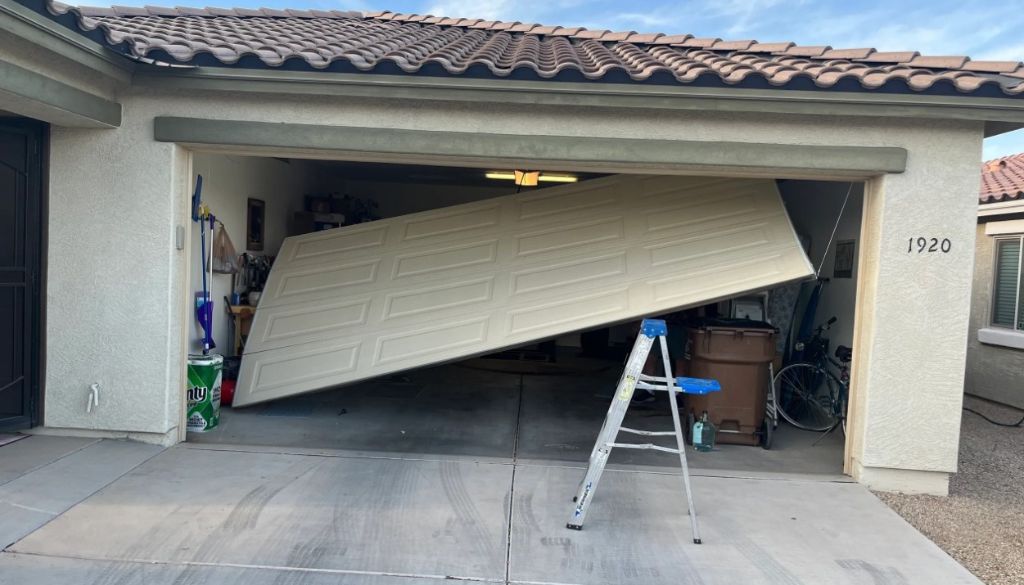
Cable trouble often announces itself through movement rather than noise. A door that once rose evenly may start lifting from one side first. The bottom edge may no longer stay level. The door may pause partway through travel, reverse unexpectedly, or close with a shudder. In some cases, the opener sounds louder because it is working against resistance. In others, the opener runs but the door does not behave as expected.
A homeowner may also see something during a basic garage door inspection. A cable may appear loose when the door is open or closed. It may look frayed, kinked, or out of place. It may not sit where it used to sit. The door may have a gap on one side near the floor. Garage door rollers may look misaligned in the garage door tracks, not because the rollers are necessarily the original cause, but because an uneven door can pull several parts out of their usual relationship.
The important point is not to diagnose too much from a single symptom. A crooked door can involve garage door cables, but it can also involve tracks, rollers, spring tension, door balance, hardware, or opener settings. A reversing door may point to a safety sensor problem, an obstruction, a binding door, or an opener that needs attention. Garage door troubleshooting works best when the system is treated as a system, not as a loose collection of parts.
There is one rule I would not bend: if the door looks uneven or a cable looks loose, stop operating the door until it has been assessed. Continuing to cycle the opener can make the situation worse. It can also put more load on components that are already stressed.
The difference between observation and repair
A safe homeowner inspection is mostly visual and behavioral. You can stand clear of the door’s path. You can look at whether both sides appear level. You can watch from inside the garage while another adult operates the wall control, provided everyone stays away from the moving door and no one reaches into the tracks. You can check whether the area around the door is clear. You can test the automatic reversal features as part of routine garage door maintenance, following the owner’s manual for your opener.
What you should not do is start loosening brackets, pulling cables, adjusting springs, or forcing the door into alignment. Cable and spring work belongs in a different category from replacing a remote battery or clearing leaves from a sensor path. Garage door springs can store significant energy, and torsion springs in particular are not beginner hardware. A cable may appear slack only because the door is in a certain position, or because another component has shifted. Pulling on it can change the balance of the door suddenly.
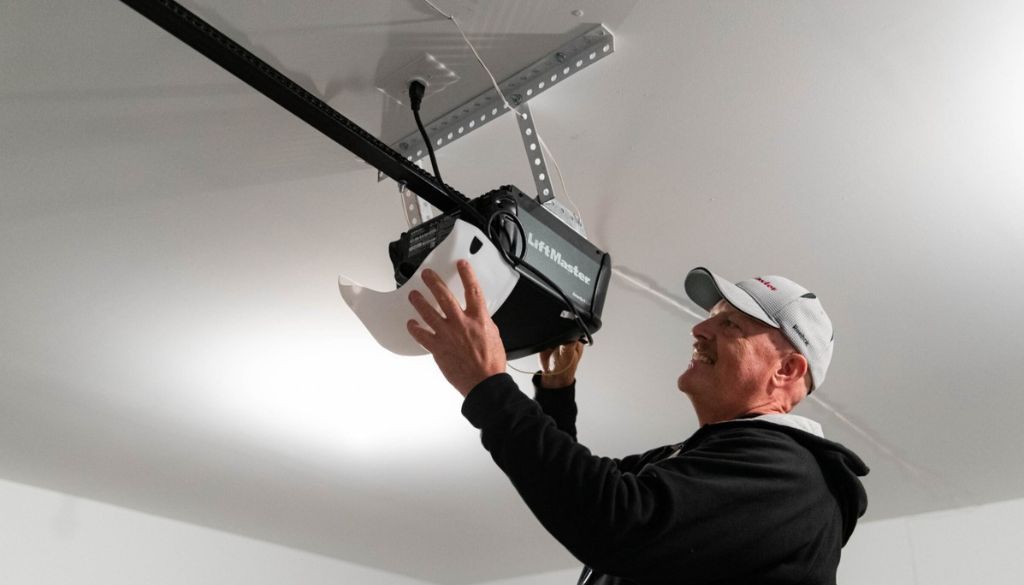
I have seen many repair calls start with a well-meant sentence: “I just tried to get it back on track.” That attempt can turn a contained problem into a bent track, damaged roller, or door that no longer closes securely. The safer decision is often the less dramatic one. Keep the door still. Disconnect no hardware unless the owner’s manual specifically tells you to do so for a safe, non-repair action. Call for professional garage door repair when the issue involves cables, springs, balance, or structural movement.
When the opener masks the real problem
A garage door opener can make a sick door look healthier than it is. Because the motor moves the door every day, it is tempting to judge the system by whether the opener can still complete a cycle. That is a poor test. An opener may drag a poorly balanced door along for a while, especially if the problem develops gradually. The household becomes used to a little more noise, then a little more hesitation, then a door that occasionally reverses.
The opener is not a substitute for proper garage door balance. If the door is not moving freely and evenly, the opener is being asked to compensate. That can hide cable or track issues until they become more serious. It can also complicate garage door troubleshooting because the symptom appears electrical or motor-related when the underlying issue is mechanical.
Safety reversal systems must be treated as part of the discussion. A properly functioning automatic opener should reverse when closing onto an obstruction. Federal safety requirements exist because entrapment protection is essential on residential automatic openers. If the door fails to reverse during a proper safety test, the opener should be adjusted according to the owner’s manual or inspected by a professional. That point becomes even more important when cable trouble is suspected, because a door that moves unpredictably has less margin for error.
Photoelectric garage door sensors should also be present and working on automatic residential openers. They are commonly mounted near the floor on either side of the door opening. Their purpose is to help prevent the door from closing when something is in the path. If they are misaligned, blocked, damaged, or ignored, a cable problem can become part of a larger safety failure.
A practical safety check before any repair decision
The following short checklist is not a repair procedure. It is a way to decide whether the door should remain out of service until a qualified person inspects it. Do not place hands near cables, springs, rollers, or tracks while performing these observations.
If any part of that check raises concern, treat the door as unsafe until inspected. That may sound conservative, but garage door safety rewards caution. A door that works nine times and fails on the tenth is still a problem door.
Why cable repair is tied to springs, balance, and tracks
Garage door cables rarely act alone. They operate in relationship with spring tension, door weight, track alignment, and roller movement. When one cable loses proper position or tension, the door may load unevenly. One side can bind while the other side continues to move. Rollers may press harder against the tracks. affordable garage door installation Gold Coast The opener may reverse, stall, or pull at an angle. Even when the cable is the visible symptom, the repair decision should account for the whole system.
Garage door springs deserve special attention in this context. Whether a system uses torsion springs or another spring arrangement, the springs help control the door’s weight. When spring tension and cable behavior are not working together properly, the door balance changes. A balanced door moves in a controlled manner. An unbalanced one can feel heavy, drift, slam, bind, or demand more from the opener.
Garage door tracks are also part of the picture. Tracks do not lift the door, but they guide it. If the door is crooked because of a cable issue, the rollers may no longer travel smoothly. If a track is bent or misaligned, it can create resistance that affects cables and springs. A homeowner may see the door rubbing or hear a scrape and assume lubrication is the answer. Sometimes garage door lubrication helps routine movement, but lubrication does not correct a cable that is off, a door that is out of balance, or a safety system that fails to reverse.
This is why a good technician does not simply look at the most obvious damaged part and leave. A proper garage door inspection considers the opener, sensors, springs, cables, rollers, tracks, balance, and mounting hardware. The goal is not to sell unnecessary work. It is to avoid repairing one symptom while leaving the cause in place.
The monthly safety habit many owners skip
Monthly safety testing sounds tedious until you have seen a door fail to reverse. The Consumer Product Safety Commission has warned repeatedly about non-reversing garage door openers as a hazard. The guidance is direct: safety reversal systems should be tested monthly, and if the door does not reverse, the opener should be adjusted according to the owner’s manual or inspected by a professional.
That habit belongs in the same mental category as checking smoke alarms. It is simple, it is easy to postpone, and it matters most on the day something goes wrong. Garage doors are often used when people are distracted. A child runs back for a backpack. A pet crosses the threshold. Someone presses the remote from the car without watching the entire closing cycle. The safety system is there because ordinary household behavior includes imperfect attention.
Children should be taught garage door safety. That means they should not play with remote controls, race under a moving door, or treat the opener button as a toy. Remotes should be kept out of their reach. This advice can sound basic, but it addresses a real pattern: garage doors become background equipment in family life. The more routine the door feels, the easier it is to forget that it is a moving mechanical system.
Cable issues increase the urgency of those habits. If a door is moving unevenly, the safest path is to keep everyone away, avoid repeated opener cycles, and arrange inspection. Do not let a child “hold the button and see if it closes.” Do not stand under the door to watch what the cable does. Do not try to guide the door by hand while the opener is running.
Repair, replacement, or broader service?
Not every cable concern leads to the same answer. A professional may find that a specific cable problem can be corrected as part of a focused garage door repair. Another situation may reveal broader wear in the rollers, tracks, springs, or opener. In older or heavily worn systems, garage door replacement may become a more sensible conversation than repeated piecemeal repairs.
The right decision depends on condition, safety, reliability, and cost. A relatively new door with a localized cable issue may justify repair. A door with recurring balance problems, damaged tracks, failing safety sensors, and an opener that does not reverse properly is a different case. At that point, the homeowner is not just buying parts. They are deciding how much confidence they want in the entire door system.
Garage door installation also deserves careful planning when replacement is chosen. Installation and repair work often involve overhead tasks, cramped spaces, hand tools, and awkward postures. Those conditions increase the value of staged, careful work. A rushed installation can create long-term operational problems. A well-planned installation sets up the door, opener, sensors, springs, tracks, rollers, and cables to work together from the start.
One edge case comes up often: a homeowner plans to replace only the garage door opener because the door has become noisy or unreliable. Sometimes that is the correct move. Other times the opener is being blamed for a mechanical problem in the door. If cables, springs, balance, rollers, or tracks are compromised, installing a new opener may not solve the underlying issue. Worse, it can give a false sense of security. The door may sound better for a short period while the mechanical problem remains.
What routine maintenance can and cannot do
Good garage door maintenance reduces surprises. It keeps small problems from becoming urgent problems. A routine inspection can catch sensor misalignment, visible wear, track obstructions, loose-looking hardware, unusual noise, or changes in door movement. Garage door lubrication, when done according to the door and opener manufacturer’s instructions, can support smooth operation where lubrication is appropriate.
Maintenance has limits, though. It cannot make a damaged cable safe. It cannot correct a door that is visibly out of balance. It cannot compensate for a non-reversing opener. It should never be used as a disguise for a problem that needs repair.
The best maintenance programs are modest and consistent. Watch how the door moves. Listen for changes. Keep the opening clear. Test the reversal system monthly. Confirm the sensors are present and unobstructed. Schedule professional service when the door begins to behave differently, especially if the change involves uneven movement, suspected cable trouble, or spring-related symptoms.
A homeowner does not need to become a technician to be a good steward of the system. In fact, the safer homeowner is often the one who knows where the line is. Visual inspection, basic cleaning around sensors, and owner’s-manual safety tests are reasonable. Adjusting cable tension, loosening spring hardware, forcing rollers back into tracks, and bypassing sensors are not.
A simple decision guide for cable concerns
When a cable issue appears, the first decision is whether to operate the door at all. If the door is crooked, if the cable is visibly loose or damaged, or if the door has recently made a sharp change in behavior, leave it alone. If a vehicle is trapped inside, the inconvenience is real, but the safety risk still needs to govern the response. A service call is cheaper than an injury or a door that falls out of position.
Use this decision guide as a practical boundary, not a repair manual.
| Situation | Safer decision | |---|---| | Door is crooked, jammed, or one side hangs lower | Stop using it and call for professional inspection | | Cable appears loose, frayed, or out of place | Do not pull or re-seat it by hand, schedule garage door repair | | Opener closes but does not reverse during safety testing | Stop using the opener until adjusted per the manual or inspected | | Sensors are blocked or misaligned | Clear obvious obstructions, then verify proper operation before use | | Door operates normally but has not been checked recently | Perform monthly safety checks and routine visual inspection |
The table may look conservative, but it reflects the way garage doors fail. A small visible symptom can carry hidden tension or alignment problems. The safest repair decision is often to reduce movement until the actual condition is known.
The role of the professional inspection
A professional garage door inspection brings structure to a situation that can otherwise become guesswork. The technician should look beyond the cable and assess the relationship among the major components. That includes garage door springs, cables, rollers, tracks, opener operation, sensors, and door balance. The inspection should also consider whether the safety reversal system works as intended.
A good inspection does not rely on one dramatic test. It uses observation, controlled movement, and knowledge of how the parts should interact. The technician should be able to explain what failed, what may have caused it, and whether related parts were affected. If a cable problem occurred because the door was binding in the tracks, replacing the cable without addressing the binding may invite the same problem again. If the opener is masking an unbalanced door, the repair should address the balance rather than simply increasing force settings.
There is also value in having the repair performed by someone equipped for overhead mechanical work. Garage door repair often requires working at height and in constrained positions. Tools, ladders, brackets, and heavy moving parts create a work environment where planning matters. This is not the same as assembling a shelf on the garage floor. The physical setup alone justifies caution.
Homeowners should expect clear communication. If garage door replacement is recommended, the reason should be tied to condition, safety, reliability, or repeated failure, not vague fear. If repair is sufficient, the technician should say so. Professional judgment is most useful when it separates urgent safety issues from ordinary wear.
What not to do when a cable comes off or looks wrong
Some unsafe responses are common because they feel intuitive. If a cable is off, the instinct is to put it back. If the door is crooked, the instinct is to lift the low side. If the opener struggles, the instinct is to press the button again and help it by hand. Each of those actions can make sense in the moment, and each can place a person close to moving parts or stored energy.
Do not bypass garage door sensors to make the door close. If the sensors are preventing closure, they may be doing their job, or they may need alignment or inspection. Either way, bypassing entrapment protection defeats a required safety function on residential automatic openers. Do not increase opener force settings to overcome a door that binds or hangs unevenly unless the owner’s manual specifically directs an adjustment as part of proper troubleshooting and the door itself is known to be in safe working order. A force setting should not become a bandage over a mechanical fault.
Do not keep cycling the opener to “see what happens.” Repeated operation can worsen a cable problem, stress the opener, and pull the door farther out of alignment. If the door is already behaving abnormally, more cycles rarely provide useful information for a homeowner. They mostly add risk.
Do not let children watch closely, hold controls, or stand near the threshold during a malfunction. The safety guidance around children and garage doors exists because children do not reliably judge timing, weight, or danger around a moving door. Keep remotes out of reach and make the garage door a no-play area.
How cable issues fit into long-term ownership
A garage door should be boring in the best sense. It should open smoothly, close predictably, reverse when required, and sit level. When it stops being boring, pay attention. Cable concerns are one of the clearest signs that the system needs more than casual attention.
Long-term ownership is not about obsessing over every squeak. It is about noticing patterns. Has the door become louder over several weeks? Does it hesitate near the same point in travel? Do the garage door rollers move smoothly through the tracks? Are the sensors frequently bumped by storage bins or yard tools? Has the opener started working harder than it used to? These observations help catch problems before they become emergency garage door repair calls.
The best time to think about garage door safety is not when the door is stuck halfway open during a storm or when a car is trapped before work. Build a rhythm. Monthly reversal testing. Periodic visual checks. Prompt attention to crooked movement, cable irregularities, spring concerns, or sensor trouble. Professional inspection when the system stops behaving normally.
Cable repair decisions become safer when they are made without panic. Stop the door. Keep people clear. Respect the opener’s safety systems. Treat springs and cables as professional territory. Consider the whole system before approving a narrow fix. Those habits protect the door, the opener, and the people who walk beneath it every day.