Garage Door Opener Safety: Sensors, Reversing Features, and Child-Safe Use
A garage door opener is one of those machines that becomes invisible when it works well. You press a wall button, the door rises, the car rolls out, and the day moves on. That convenience can make the system feel harmless. It is not. A residential garage door is a large moving barrier, and the opener is only one part of a larger mechanical system that includes springs, cables, rollers, hinges, tracks, brackets, and the door itself.
Good garage door safety depends on three things working together: a properly balanced door, reliable entrapment-protection features, and safe household habits. The opener should not be asked to overcome a failing spring system or drag a crooked door through damaged garage door tracks. The sensors should not be treated as optional accessories. Children should not be allowed to race under a moving door, play with remote controls, or treat the wall button like a toy.
I have seen homeowners focus on the opener because it is the visible “motor” in the system, while the real safety issue was somewhere else: a door too heavy to lift by hand, a frayed cable, rollers binding in the track, or photo eyes knocked out of alignment by a bicycle handlebar. The opener gets blamed because it stops, reverses, flashes, or refuses to close. Often, it is doing exactly what it was designed to do.
Why opener safety changed
Older automatic garage door openers did not always reverse reliably when they met an obstruction. That is why non-reversing openers are considered a serious hazard. Automatic residential openers manufactured on or after January 1, 1993 were subject to revised entrapment-protection requirements, with UL 325 compliance forming part of the federal safety framework. That date matters for homeowners because it separates many older units from the modern safety expectations people now take for granted.
A garage door opener made before these requirements may still lift and lower a door, but “it still runs” is not the same as “it is safe.” Many older units were built before photoelectric sensors became a standard part of residential opener safety. If an opener does not have modern entrapment protection, or if its reversing feature cannot be confirmed through proper testing, replacement is usually the responsible path. Garage door replacement often gets discussed in terms of curb appeal and insulation, but opener replacement can be just as important when safety features are outdated.
Modern systems typically include photoelectric garage door sensors near the bottom of the door opening. These sensors project an invisible beam across the opening. If a child, pet, toy, box, or garden tool interrupts that beam while the door is closing, the opener should stop and reverse. That feature has prevented countless close calls. It also creates one of the most common homeowner complaints: “The door will open, but it will not close.” In many cases, that is not a failure. It is the safety system reporting a problem.
The photoelectric sensors are not decorations
The small sensor boxes mounted near the floor are easy to underestimate. They sit low, collect dust, get bumped by trash cans, and sometimes end up partially blocked by storage. When aligned and clean, they provide a simple but important layer of protection. When misaligned, dirty, damaged, or bypassed, they compromise the entire system.
A common service call starts with a frustrated homeowner holding the wall control down to force the door closed. The door reverses with the remote, works only from the wall station, or refuses to travel downward unless constant pressure is applied. The cause might be a storage bin sitting an inch into the beam path. It might be sun glare, a loose sensor bracket, a cobweb across the lens, or wiring disturbed during weekend organizing. The fix can be simple, but the principle is important: the opener should not close automatically unless its entrapment-protection system is functioning as intended.
The sensor brackets should be secure, the lenses should face each other, and the beam path should stay clear. Homeowners sometimes twist the sensors upward or tape them together near the opener head to “solve” nuisance reversals. That defeats the safety system. It also creates a false sense of security because the opener may appear to work normally while losing one of its most important protections.
Garage door troubleshooting should begin with respect for the sensor circuit, not suspicion of it. If the door reverses as it closes, the first question is not how to override the opener. The first question is what the opener detected, or failed to detect correctly. The answer might be in the sensor alignment, the track condition, the balance of the door, or an obstruction that only appears when the door reaches a certain point in travel.
Reversing features and what they can, and cannot, do
A modern garage door opener should have a reversing function. If the door encounters resistance while closing, the opener is expected to stop and reverse. This is a critical safety feature, but it is not a license to ignore the rest of the door system. Reversing mechanisms depend on correct installation, proper adjustment, and a door that moves smoothly.
A heavy or sticky door creates a problem. The opener may interpret normal resistance as an obstruction and reverse unnecessarily. Worse, an improperly adjusted opener on a poorly balanced door can strain parts and reduce the reliability of the system. This is why manufacturers and safety guidance warn against using an opener on an improperly balanced door. The opener is not meant to compensate for failing garage door springs or a binding track. Its job is to move a door that is already mechanically sound.
The hand test tells a lot. With the opener disconnected from the door, a properly balanced door should move smoothly by hand. If it feels unusually heavy, drops, sticks, jerks, or will not stay in a reasonable position during travel, the spring system may be out of balance. That condition can accelerate wear on garage door rollers, hinges, and other hardware. It also asks the opener to do work it was not designed to do.
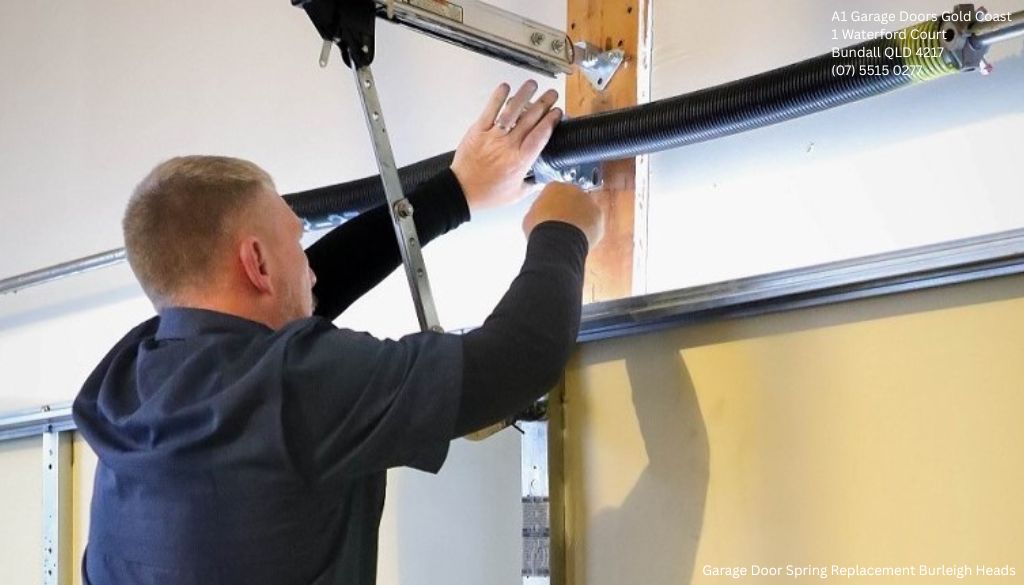
This is where judgment matters. A homeowner can observe how the door moves, listen for scraping or grinding, and check whether the tracks are visibly obstructed. But garage door springs, torsion springs, and garage door cables are high-risk components. They are under significant stored energy. Broken springs, jammed doors, and cable problems should not be treated as weekend experiments. Operating the door in that condition can make the damage worse and expose people to serious injury. Professional garage door repair is the safer route when springs or cables enter the picture.
A balanced door is the foundation of opener safety
The opener should be considered the operator, not the muscle. The spring system carries the weight of the door so the opener can guide it through travel. When the balance is wrong, everything suffers. Rollers wear faster. Hinges loosen. Brackets take more stress. The opener may strain, reverse, chatter, or stop. The door may close too hard or lift unevenly.
Garage door balance is especially important with heavier doors and with older systems that have seen years of seasonal movement, vibration, and daily use. A door that ran acceptably last winter may feel rough after months of temperature changes and hardware wear. Small changes accumulate. A loose bracket here and a worn roller there can turn into a door that no longer travels cleanly.
The practical sign is smoothness. A good door does not need to be forced. It should not scrape its way down the tracks or lurch as if it is fighting the opening. If it does, the right response is a garage door inspection, not repeated opener adjustments. Adjusting opener settings to overpower mechanical problems can mask symptoms while the underlying condition gets worse.
There is also a safety habit worth repeating: keep people clear while the door is moving. Even a well-maintained door deserves respect. Do not walk under it while it is traveling. Do not reach into the track area. Do not let children hang from the door, pull on the emergency release cord, or stand near the opening to “beat” the door. The best reversing system is still a backup, not a game.
Child-safe use begins with access control
Children are naturally drawn to moving equipment. A garage door opener has lights, sound, motion, and buttons. To a child, the wall control can look like any other switch. To an adult, it should be treated more like a machine control.
Wall buttons should be mounted where young children cannot easily reach them. Remote controls should not be left where children can play with them, including in cup holders, low shelves, unlocked cars, or backpacks. Smart controls and keypad codes deserve the same garage door services caution. Convenience features are useful only when access is managed.
The family rule should be simple: adults operate the door, children stay away from the opening while it moves. That rule needs to be repeated because children learn by testing boundaries. I have watched a child drop a ball near a closing garage door and dart toward it without understanding the risk. The sensor may catch the movement, but no household should rely on sensors as the first line of defense. The first line is supervision and clear habits.
Garage doors also create pinch points. Hinges, section joints, tracks, and rollers are not safe places for small hands. A child watching the door move may reach toward a roller or track out of curiosity. That is why “stay away from the door” is better than “do not stand under the door.” The risk is not limited to the center of the opening.
A practical homeowner safety check
A brief monthly look can catch many issues before they become dangerous or expensive. This is not a substitute for professional service, and it should not include spring or cable adjustment. It is a common-sense garage door maintenance routine focused on observation, cleanliness, and safe function.
That last point is the one people most often ignore. A noisy door invites tinkering. A stuck door invites force. A broken spring invites someone to “just lift it once.” Those instincts are understandable, especially when a car is trapped inside the garage, but they are risky. Springs and cables can injure people who do not have the training and tools to handle them safely.
Lubrication helps, but only in the right places
Garage door lubrication is one of the simplest maintenance tasks, and also one of the easiest to do incorrectly. The goal is to reduce friction at moving metal contact points, not to coat everything in oil. A silicone-based lubricant or white lithium grease is commonly used on hinges, rollers, springs, and bearing plates as directed. Excess lubricant should be wiped off so it does not collect grit.
The tracks are different. They should be clean, not lubricated. Greasing tracks can attract dirt and create the kind of sticky buildup that makes the door move worse over time. If rollers are not moving smoothly in clean tracks, the answer may be worn rollers, track alignment, hinge wear, or balance issues rather than more lubricant.
Nylon rollers deserve special care. Some manufacturer guidance specifically advises not lubricating nylon rollers, while also recommending high-quality nylon rollers for quieter operation. That creates a useful distinction: lubrication can quiet and protect many metal moving parts, but it is not a universal cure for noise. A loud garage door might need better rollers, tightened hardware, improved balance, or replacement of worn components.
Noise itself is not always a safety defect, but it is information. Grinding suggests a different issue than rattling. A pop from a torsion spring area deserves more caution than a squeaky hinge. A rhythmic clunk at each roller position may point toward roller or track trouble. Good garage door troubleshooting starts by listening carefully, then matching the sound to the movement.
When the opener is blamed for a door problem
Many opener complaints begin with symptoms that sound electrical but turn out mechanical. The door starts down and reverses. The opener hums but does not move the door. The remote works sometimes. The opener seems weaker than it used to be. While opener components can fail, the door system should be evaluated before assuming the motor is the culprit.
If the door does not move smoothly by hand, the opener should not be forced to operate it. A spring system that is out of balance can make the opener work harder than intended. Worn garage door rollers can bind in the tracks. Loose hinges or brackets can throw sections slightly out of alignment. Debris in the tracks can cause resistance at the same point in every cycle. Any of these conditions can trigger reversals or stoppages.
There is a practical reason professionals often disconnect the opener during diagnosis. Once the opener is separated from the door, the door’s true condition becomes obvious. A balanced, healthy door feels controlled. A problem door announces itself quickly. It may feel dead heavy, drift down, stick halfway, or shift unevenly. That information guides the repair.
Opener settings should not be used to hide these symptoms. If the door is binding, increasing force is not a repair. If the sensors are misaligned, bypassing them is not a repair. If a cable is frayed, running the door until it breaks is not a repair. Safe garage door repair addresses the cause, not just the inconvenience.
Installation choices affect safety for years
Garage door installation and opener installation set the baseline for everything that follows. A properly installed door tracks cleanly, uses the correct spring system, and pairs with an opener suited to the door. A rushed or careless installation can leave the homeowner with nuisance reversals, uneven movement, premature wear, and safety concerns.
Skilled homeowners may be able to handle some garage door projects, but installation demands careful reading of instructions and respect for hazards. Spring installation and adjustment are especially dangerous. That applies to torsion springs in particular, but it is wise to treat any spring system seriously. The stored energy in these parts is not visible in the way a spinning saw blade is visible, which can make the danger easier to underestimate.
The opener should also be installed and maintained according to the owner’s manual. Manuals are not exciting reading, but they contain model-specific safety instructions, testing procedures, and maintenance guidance. A homeowner who recently moved into a house should locate the manual or identify the opener model and get familiar with its controls. It is common to inherit a garage system without knowing its age, maintenance history, or whether the safety features have ever been tested.
If the door itself is damaged, opener safety can be affected. Bent sections, cracked panels, and damaged hardware may cause uneven travel. Panel damage repair might seem cosmetic, but a section that no longer sits properly in the opening can change how the door moves. In some cases, garage door replacement is more sensible than trying to keep a compromised door in service. The right decision depends on the condition of the panels, hardware, tracks, springs, and opener, not appearance alone.
Smart controls do not replace physical safety
Smart garage door technology adds convenience. It can help homeowners check whether a door is open or closed and operate the door without standing at the wall control. That convenience should not blur the basic rule: the door opening must be clear before the door moves.
Remote operation carries a special responsibility because the person activating the door may not be looking directly at it. The sensors and reversing features matter even more in that situation, but they still do not replace awareness. Storage, pets, children, and partially moved objects can change the garage environment quickly. A laundry basket set near the beam, a scooter left beside the track, or a box leaning into the opening can turn a routine close command into a safety event.
Child-safe use also extends to digital access. If older children have app access or keypad codes, they need clear rules. The garage door should not be opened for friends without permission, activated as a prank, or used as a shortcut while someone else is in the opening. Technology changes the control method, not the hazard.
Signs that safety service is overdue
A garage door system often gives warnings before a serious failure. The challenge is knowing which signs deserve immediate attention. Some issues can be observed and monitored briefly. Others call for stopping use until a professional can inspect the door.
A safety-focused service call is warranted when the door reverses repeatedly without an obvious sensor obstruction, when it closes unevenly, when it scrapes or binds, or when the opener strains. The same is true if the door feels too heavy by hand, if a spring appears broken, if cables look frayed or loose, or if rollers have come out of alignment with the tracks. These are not just performance complaints. They affect how reliably the opener can control the door.
Visible hardware deserves respect. Loose bolts and brackets can often be tightened as part of routine maintenance if they are accessible and not tied to spring tension. But brackets connected to spring systems and cables are not casual repair points. When in doubt, step back. The line between simple maintenance and dangerous repair is not always obvious from the outside.
Garage door rollers and tracks are another area where homeowners can safely observe but should be careful about intervention. Dirt and debris can be cleaned from tracks. Obvious impact damage, severe misalignment, or rollers binding under load call for professional evaluation. A track does not have to be dramatically bent to cause trouble. Even small alignment issues can show up as jerky travel or repeated opener reversals.
What a safe household routine looks like
The safest homes treat the garage door like a machine, not furniture. Adults notice how it sounds. They keep the opening clear. They do not let children play near it. They test and maintain safety features. They call for help when springs, cables, balance, or major track issues appear.
A good routine does not need to be complicated. It needs to be consistent. Listen when the door runs. Watch it occasionally instead of walking away the moment the button is pressed. Keep boxes, bikes, tools, and sports equipment away from the sensor path. Wipe dust from the sensor lenses when cleaning the garage. Keep remotes away from children. Read the opener manual before changing settings. Schedule garage door maintenance when the system begins to feel different, not only after it fails.
The trade-off is simple. A little attention prevents the opener from becoming the last stressed component in a neglected system. Safety features work best when the door is balanced, the hardware is maintained, the sensors are aligned, and the people using the system understand its limits.
Repair, maintenance, or replacement
Not every problem means the entire system needs replacement. A misaligned sensor, dirty lens, loose hinge, worn roller, or lack of proper lubrication may be addressed through maintenance or targeted repair. A damaged opener without modern entrapment protection, a door with serious structural damage, or a system with repeated unsafe operation may justify replacement.
The age of the opener matters. If a unit predates modern safety requirements, replacement deserves serious consideration even if the motor still runs. If the door itself is out of balance or damaged, a new opener alone will not solve the problem. If the springs are worn or incorrectly adjusted, the correct repair is in the counterbalance system, not the remote control. Professional judgment helps separate a simple fix from a false economy.
Homeowners often ask whether they should repair the opener, replace the opener, or replace the whole door. The answer depends on how the system behaves as a whole. A quiet, balanced door with a failed opener may only need opener service or replacement. A rough, heavy door with worn rollers, questionable cables, and damaged panels may need broader garage door repair or replacement planning. A newer door with sensor issues may only need careful garage door troubleshooting and adjustment.
The most important decision is not whether to spend the least today. It is whether the door can operate safely tomorrow, next month, and through the seasons that follow.
The standard worth keeping
A safe garage door opener system is not defined by convenience. It is defined by controlled movement, reliable reversing, working sensors, proper balance, and responsible use. The opener should respond predictably. The door should move smoothly. The sensors should guard the opening. Children should be kept away from controls and moving parts. Springs and cables should be handled by trained professionals, not improvised repairs.
When those pieces work together, the garage door becomes what most people assume it already is: a dependable part of the home that opens and closes without drama. When one piece is ignored, the system can become unpredictable. A sensor taped out of position, a door forced to run with a broken spring, a remote left in a child’s hands, or a track packed with debris can undermine the safety built into the equipment.
The garage is often the busiest entrance to a home. That makes opener safety more than a technical concern. It is a daily habit, repeated every time someone presses the button.