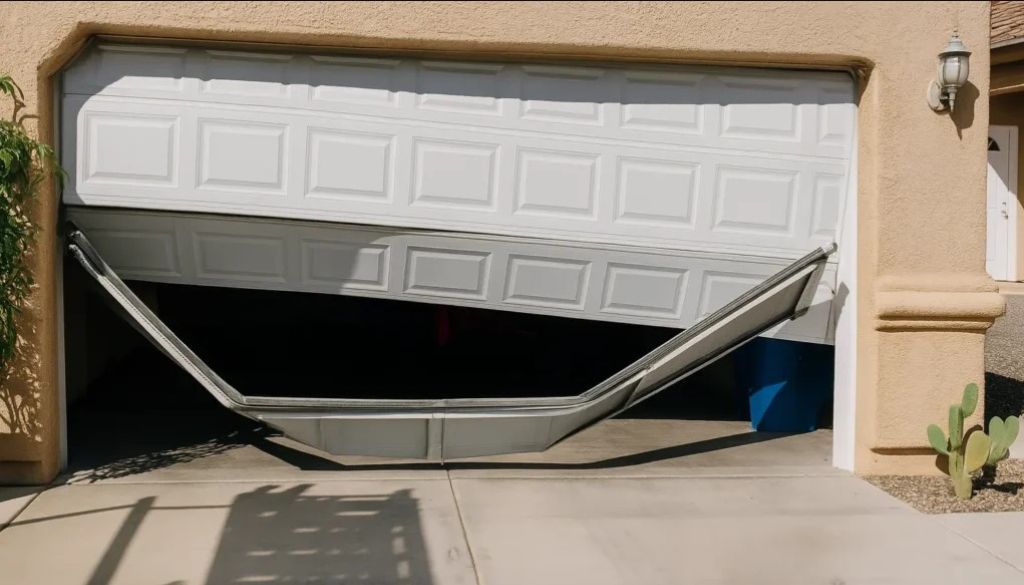
Garage Door Tracks Safety Guide for Homeowners
Garage door tracks do not usually get the same attention as the opener, the remote, or the springs. They sit along the sides of the door, partly hidden by the door sections, rollers, brackets, and the general clutter of a working garage. Yet they are central to the way the whole system moves. When the door travels up or down, the tracks guide the garage door rollers and help keep the door moving in a controlled path. If that path is interrupted, forced, bent, blocked, or ignored, the door system can become unpredictable.
For homeowners, the most important point is not that every track issue is dramatic. Many are not. The point is that garage doors combine weight, movement, electrical equipment, tensioned hardware, overhead parts, and narrow working spaces. A small symptom can be harmless, or it can be the first visible sign of a larger garage door safety problem. Good judgment matters. So does knowing where homeowner maintenance ends and professional garage door repair begins.
This guide focuses on garage door tracks, but it also places them in the broader safety picture. Tracks interact with the garage door opener, garage door springs, torsion springs, garage door cables, garage door rollers, garage door sensors, and the door’s balance. Looking at the tracks in isolation can lead to poor decisions. Looking at the whole system gives you a safer, more useful way to inspect and troubleshoot the door.
Why garage door tracks deserve attention
A residential garage door is a moving wall. The tracks help define the path of that wall. They do not lift the door by themselves, and they are not the only safety concern, but they influence how smoothly and predictably the door travels.
When the door moves properly, the rollers stay seated in the tracks, the sections move without binding, and the opener does not have to fight the door. When the system is not moving properly, the symptoms may show up as rubbing, hesitation, shaking, unusual noise, or a door that does not close in a clean, straight motion. Some homeowners first notice the problem because the garage door opener stops and reverses. Others notice because the door looks slightly uneven or because the rollers appear strained as they pass through one section of track.
That is the moment to slow down. A garage door that is resisting movement should not be forced repeatedly with the wall button or remote. The opener is not a winch meant to overcome mechanical trouble. It is part of a system that depends on the door, tracks, rollers, cables, springs, and sensors working together. If the door is binding in the tracks, repeated operation can make the situation worse and may create a safety hazard.
Tracks also matter because they sit in the areas homeowners are most likely to bump, lean storage against, or overlook. A garage is not a showroom. Ladders, bicycles, bins, tools, and seasonal items often sit near the door opening. Anything stored close to the track path can become a problem if it interferes with door travel or blocks the safety equipment near the floor.
The safety system is more than metal track
It is tempting to think of garage door safety as a purely mechanical subject. Tracks, rollers, hinges, cables, and springs are mechanical, so they naturally draw the eye. But automatic residential garage door openers also fall under a mandatory federal safety standard in the United States. They must include entrapment protection, such as a photoelectric electric eye sensor or an equivalent safety system.
That requirement matters every time the door closes. A properly functioning opener should reverse when the door encounters an obstruction while closing. The photoelectric sensors near the lower part of the door opening are part of that protection. If the invisible beam between them is interrupted, the opener should not continue closing the door as though nothing happened.
The tracks and the sensors are connected in a practical way. If the tracks are misaligned enough to affect how the door closes, the door may not reach the floor cleanly. If stored items are crowded around the lower tracks, they may also obstruct or misalign the garage door sensors. If a homeowner focuses only on the metal track and ignores the safety reversal system, an important layer of protection can be missed.
The Consumer Product Safety Commission has warned for years that non-reversing garage door openers are hazardous. That warning is not theoretical. Fatal entrapment incidents involving automatic garage doors have been documented, which is why monthly testing of the safety reversal system is part of responsible garage door maintenance. If the door fails to reverse when it should, it needs adjustment according to the owner’s manual or inspection by a qualified professional.
What a homeowner can safely observe
A careful visual garage door inspection is one of the most useful habits a homeowner can build. It does not require taking the system apart, loosening brackets, adjusting springs, or standing under moving hardware. It does require patience and attention.
Stand inside the garage with the door closed and look along both vertical tracks. They should appear secure, with no obvious gaps where brackets have pulled away. Then open the door and watch from a safe position. The movement should be even. The rollers should travel inside the tracks without scraping, jumping, or binding. Close the door and watch again, paying attention to whether one side seems to lag, shake, or strain.
A safe inspection also includes the space around the tracks. Items stored close to the door opening should not interfere with the moving door, the rollers, the track hardware, or the garage door sensors. Children should not play around the garage door, and remote controls should be kept out of their reach. That guidance is simple, but it remains one of the most important parts of garage door safety because a garage door can look familiar and harmless right up until it is not.
Listen as well as look. A door that has changed its sound deserves attention. Noise by itself does not diagnose the cause. It may involve rollers, hinges, track contact, garage door lubrication, the opener, or another part of the system. The useful point is the change. If the door has always moved one way and now moves differently, the system is telling you something.
A basic homeowner observation can reasonably include these checks:
That is the first allowed list, and it is intentionally short. The goal is not to turn a homeowner into a technician. The goal is to help a homeowner notice unsafe conditions before someone gets hurt or before a minor problem becomes a larger garage door repair.
Monthly reversal testing is not optional maintenance
Some maintenance tasks are easy to postpone because the door still opens. The safety reversal test should not fall into that category. Automatic garage doors can create entrapment hazards if the opener does not reverse properly. Federal safety rules require entrapment protection on residential automatic openers, and safety guidance calls for monthly testing.
The test should be done as described in the owner’s manual for the specific garage door opener. That detail matters because opener models and safety systems vary. A homeowner should not guess, improvise, or bypass a safety feature. If the door does not reverse during the required test, the opener should be adjusted according to the manual or inspected by a professional.
The relationship between reversal testing and garage door tracks is practical. A door that drags, binds, or sits out of line can affect how the opener behaves. The opener may stop, reverse, or strain because the door is not traveling properly. Sometimes a homeowner interprets this as an opener problem and starts troubleshooting the motor or remote. Sometimes the safer question is mechanical: is the door itself moving freely and correctly through the tracks?
This is where garage door troubleshooting needs discipline. A symptom at the opener may originate at the track, rollers, balance, cables, or springs. A symptom at the track may be influenced by the opener or by the way the door is closing. The safest response is to avoid forcing the system and to work from simple observation toward professional evaluation when needed.
Tracks, rollers, cables, and springs work as one system
Garage door tracks guide motion, but they do not carry the whole story. Garage door rollers ride in the tracks. Garage door cables are part of the lifting system. Garage door springs, including torsion springs on many systems, help counterbalance the door. The opener moves the door under controlled conditions, but it depends on the door being properly balanced and mechanically sound.
Garage door balance is especially important. A door that is badly out of balance can place stress on other components and may not behave predictably. Balance issues are not something to treat casually. Springs and related hardware can be under significant tension, and adjustment is not a simple homeowner task. When a door appears uneven, heavy, erratic, or hard for the opener to move, professional inspection is the safer choice.
The same judgment applies to garage door cables. If a cable appears loose, damaged, displaced, or involved in uneven door movement, the door should not be treated as a normal operating door. Tracks may show the symptom, such as one side moving differently, but the cause may sit elsewhere in the system. Trying to “fix the track” while ignoring cable or spring behavior can be a dangerous mistake.
This is why professional garage door repair often begins with observation of the full system rather than a narrow focus on one part. A technician will consider the tracks, rollers, cables, springs, opener, sensors, and door sections together. Homeowners can borrow that mindset without attempting the same repairs. If multiple parts seem involved, the job has moved beyond routine garage door maintenance.
When lubrication helps, and when it hides the real issue
Garage door lubrication is a common maintenance topic, and it has a place in keeping a door moving smoothly. The risk is using lubrication as a cure-all. If a door binds in the tracks, shakes hard, fails to reverse correctly, or moves unevenly, lubrication alone is not a diagnosis. It may quiet a symptom without addressing the cause.
A homeowner can reasonably understand lubrication as part of routine care, not as a substitute for inspection. If the rollers are not traveling correctly, if the track appears bent, if hardware looks loose, or if the door no longer closes evenly, the problem needs more than a spray can. Adding lubricant to a system with a mechanical fault can make the door seem temporarily better while the underlying condition remains.
There is also a cleanliness issue. Tracks can collect debris. A track path that is physically obstructed is different from a track that needs lubrication. Before assuming friction is the issue, look for objects or buildup that interferes with roller travel. Do not place hands near moving rollers or inside the track path while operating the door. Stop the door, keep clear of pinch points, and inspect only from a safe position.
Good maintenance is not dramatic. It is consistent, boring, and observant. The homeowner who notices a change early usually has more options than the homeowner who keeps pressing the remote until the door finally jams.
Signs that the track may be part of the problem
Garage door tracks can be involved in several visible symptoms. The key word is “involved.” A track symptom does not prove the track is the root cause. A roller issue, cable issue, opener problem, spring problem, or balance problem can all affect how the door travels.
A door that rubs at one side, hesitates at the same point, or appears to twist slightly during travel deserves attention. So does a roller that appears to ride poorly in the track or a section of track that looks visibly distorted. If the opener reverses before the door reaches the floor, do not assume the opener is simply being fussy. The reversal may be responding to resistance or a safety condition.
Garage door garage door installation and setup Gold Coast sensors also deserve a close look when closing problems occur. Because residential automatic openers must include entrapment protection, sensor performance is central to safe operation. If the sensors are blocked, misaligned, damaged, or otherwise not working as intended, the opener may not close properly. The correct response is not to bypass the sensor. The correct response is to restore safe function, using the owner’s manual or professional service when needed.
Track-related symptoms often appear gradually. A homeowner may hear a slight scrape for weeks before the door begins to hesitate. Or the door may close almost normally, except for one rough movement near the floor. Gradual changes are easy to excuse. They are also the changes that a monthly inspection can catch before the system becomes harder to manage.
What not to do when the door misbehaves
Homeowners often want to solve problems quickly, especially when a car is trapped inside or the door will not close at night. Urgency is understandable. It can also lead to poor decisions.
Do not keep cycling the opener if the door is binding or reversing unexpectedly. Repeated operation does not make a mechanical problem safer. Do not disable garage door sensors to force the door closed. Those sensors are part of the required entrapment protection system. Do not let children operate the door as a workaround, hold the wall button, or stand near the opening while an adult experiments with the controls. Children should be taught garage door safety, and remotes should be kept out of their reach.
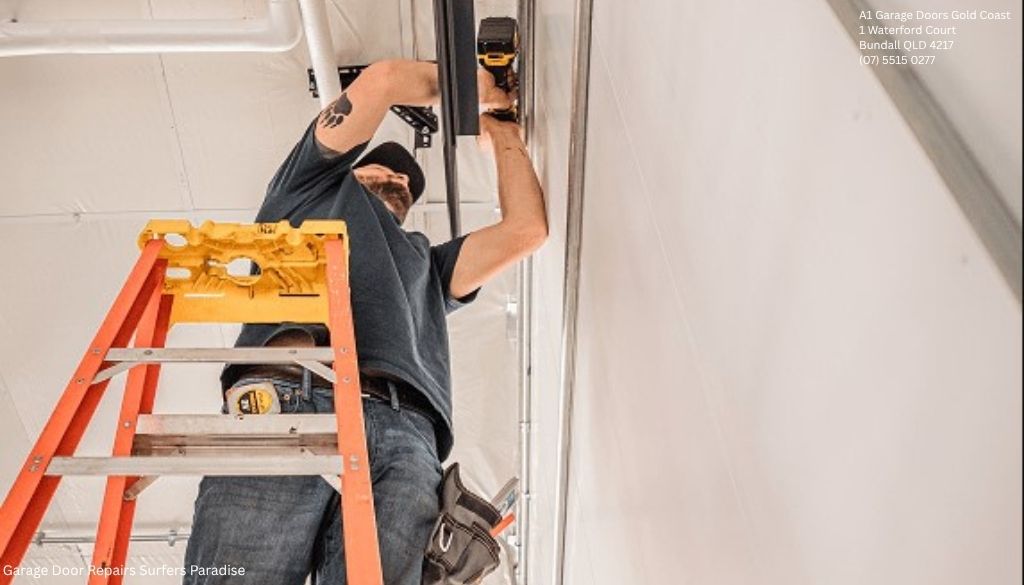
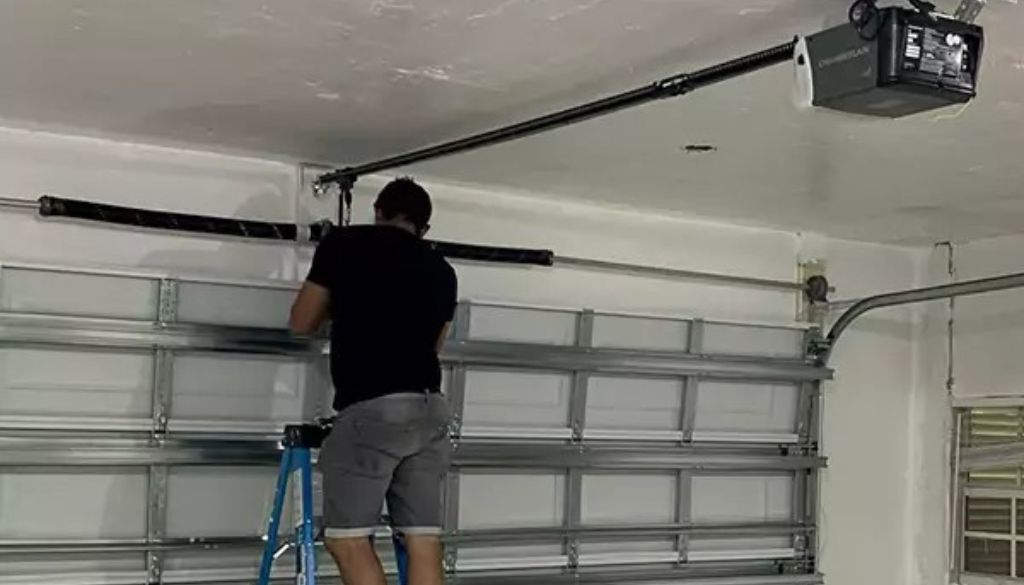
Do not loosen track brackets, spring hardware, cable hardware, or other structural parts unless you are qualified to understand the consequences. Garage doors involve moving parts, overhead components, and tensioned systems. Installation and repair work can also place workers at ceiling height, in cramped spaces, with awkward postures and hand-tool hazards. Those risks are real even for trained people. For an untrained homeowner working alone, they are easier to underestimate.
A useful boundary is this: observation, cleaning around the area, checking for obvious obstructions, and performing owner’s-manual safety tests are homeowner tasks. Adjusting spring tension, repairing cables, realigning major track components, correcting balance, and diagnosing a non-reversing opener belong in the professional category.
Safe garage door troubleshooting without overreaching
Safe troubleshooting starts with the least invasive question: what changed? Did the door begin rubbing after something was stored near the track? Did the opener start reversing after an item was placed near the sensor path? Did the sound change after a period of rough operation? Did the door become uneven, heavy, or hesitant without an obvious outside cause?
From there, separate what you can verify from what you are guessing. You can verify whether the sensor area is blocked. You can verify whether a storage bin is leaning into the track path. You can verify whether the door fails a safety reversal test. You may not be able to safely verify whether torsion springs are properly adjusted, whether the cables are carrying load correctly, or whether the door balance has shifted.
That distinction matters because confident guessing around a garage door can create danger. Many parts of the system are close together, and symptoms overlap. A door that will not close may involve garage door sensors, track obstruction, opener settings, door balance, damaged rollers, or another condition. A door that shakes may involve rollers, tracks, cables, springs, or the door sections themselves. The safest homeowner role is to gather clear observations, stop using the door when safety is in doubt, and call for garage door repair when the issue is beyond basic checks.
If the door fails to reverse during the monthly safety test, treat that as a serious condition. Follow the owner’s manual for adjustment if it provides a clear procedure within homeowner capability. If not, or if the problem persists, arrange professional inspection. A non-reversing garage door opener is a known hazard, not a minor inconvenience.
Garage door installation and replacement considerations
Garage door installation and garage door replacement are moments when track safety should receive deliberate attention. New equipment does not automatically mean safe performance unless it is installed, adjusted, and tested correctly. The door, tracks, opener, sensors, springs, cables, and rollers must work as a matched system.
A replacement door may involve new tracks, new hardware, or a new opener, depending on the job. Homeowners should avoid assuming that old track conditions are acceptable simply because the previous door operated. They should also avoid assuming that a new garage door opener can compensate for a door that is not balanced or does not travel correctly. The opener is not there to overpower defects. It is there to operate a properly functioning door with required safety protection.
Professional installation is valuable not only because the installer has tools, but because the work occurs in a physically demanding environment. Garage door work often involves ceiling-height tasks, cramped positions, awkward reaches, and hand tools. Those conditions increase the chance of mistakes. A staged, careful approach is not just neat workmanship. It is part of safety.
After installation or replacement, the safety reversal system should be tested according to the opener’s instructions. The photoelectric sensors or equivalent entrapment protection should be present and working. The door should travel smoothly through the tracks without hesitation or forcing. If something feels off, address it before the system becomes part of daily routine.
Children, remotes, and the false comfort of familiarity
A garage door is familiar equipment. That familiarity can dull caution, especially in a busy household. Children may see the remote as a button that makes a large object move. Adults may treat the closing door as background noise while carrying groceries, talking on the phone, or backing out of the driveway.
The safety guidance is direct: children should be taught garage door safety, and remote controls should be kept out of their reach. This applies whether the door and tracks look perfect or not. A properly functioning safety system reduces risk, but it does not turn the garage door into a toy.
Track areas are also poor places for play or storage. The sides of the opening contain moving rollers, brackets, and the path of the door. When a door is closing, nobody should be leaning into that space, reaching toward the tracks, or trying to move items out of the way at the last second. The better habit is to keep the area clear before operating the door.
Safety culture at home is built through small repeated choices. Test the reversal system monthly. Keep remotes away from children. Do not walk under a moving door. Do not race the door. Do not bypass sensors. These habits sound simple because they are. They matter because the consequences of getting them wrong can be severe.
When to call a professional
There is no shame in calling a technician for a garage door problem. The system is larger, heavier, and more complex than it appears from the driveway. The safest homeowners are usually not the ones who attempt every repair. They are the ones who know which problems deserve trained hands.
Call a professional when the door fails a safety reversal test, when the tracks appear damaged or out of position, when rollers are not traveling properly, when cables look wrong, when springs may be involved, when the door seems out of balance, or when the opener behaves unpredictably after basic checks. Also call when you cannot identify the cause but the door’s movement has changed. Uncertainty around a moving overhead door is reason enough.
A concise decision guide helps:
That is the second and final list. The purpose is to set a practical threshold. Homeowners can handle observation and simple clearing of obstructions. They should not gamble with spring tension, cable behavior, track alignment, or failed entrapment protection.
A practical maintenance rhythm for safer tracks
Good garage door maintenance does not need to be complicated. Once a month, choose a time when the garage is well lit and you are not rushing. Watch the door open and close from a safe position. Look along the tracks. Check the area near the sensors. Confirm that stored items have not migrated into the door path. Test the safety reversal system as directed by the opener’s owner’s manual.
This rhythm works because it matches how garage door problems often develop. The door may not fail suddenly. It may get louder. It may start to rub. The opener may reverse once, then behave normally, then reverse more often. A roller may seem rough in the same part of the track each time. A monthly habit catches patterns.
Keep the owner’s manual accessible, whether in a drawer, a labeled folder, or a digital file. The manual matters for opener adjustment, safety testing, and understanding the specific system installed in your garage. If the manual says to test a feature a certain way, follow that procedure rather than relying on memory or advice meant for a different opener.
For homeowners who have recently moved into a house, the first garage door inspection is especially important. You may not know the age of the opener, the maintenance history, or whether previous owners treated sensor issues properly. Confirm that the entrapment protection is present and working. Watch the tracks and rollers. Listen to the door. If anything seems uncertain, schedule a professional garage door inspection before small doubts become daily assumptions.
The safest repair is the one matched to the risk
Garage door tracks look straightforward, which is why they invite homeowner tinkering. But the tracks are tied into a system that includes electrical controls, entrapment protection, rollers, cables, springs, and balance. A safe approach respects those connections.
If the issue is a box leaning into the track area, move the box. If the issue is a blocked photoelectric sensor, clear the path and test the opener properly. If the door fails to reverse, binds in the tracks, appears uneven, or suggests trouble with garage door springs, torsion springs, garage door cables, or balance, stop treating it as ordinary maintenance. That is garage door repair territory.
A safe garage door does not depend on one part being perfect. It depends on the system doing the right thing every time: the door travels smoothly, the rollers stay guided, the opener reverses when it should, the sensors work, and people stay clear of the moving door. Tracks are a visible part of that system, and they deserve a homeowner’s regular attention.
The best habit is calm consistency. Watch the door. Test the reversal system monthly. Keep the track and sensor areas clear. Teach children to stay away from the moving door and keep remotes out of reach. Call a professional when the symptoms point beyond simple observation. That approach protects the door, the opener, and the people who use the garage every day.